Handheld X-ray Market Outlook:
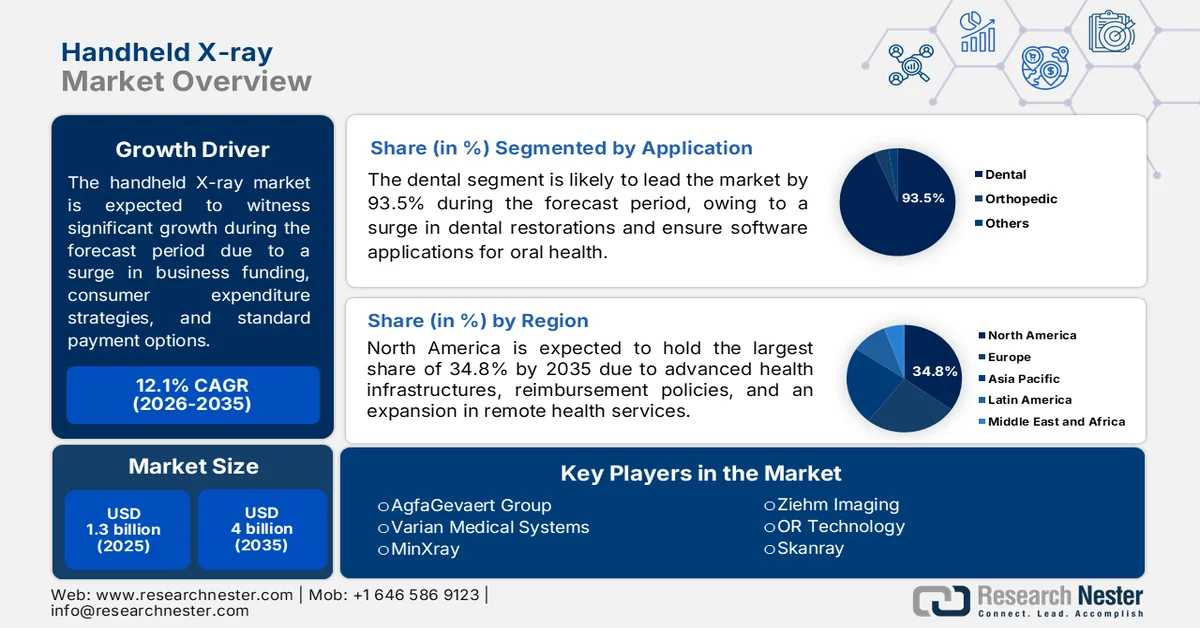
Handheld X-ray Market size was valued at USD 1.3 billion in 2025 and is projected to cross USD 4 billion by the end of 2035, expanding at more than 12.1% CAGR during the forecast period, i.e., 2026-2035. In 2026, the industry size of handheld X-ray is evaluated at USD 1.4 billion.
The global handheld X-ray market is being readily shaped by an acceleration in the retirement of experienced radiologic technologists, the rising prevalence of hospital-based infections, supply chain resilience, and the growth of direct primary care and concierge medicine models. According to official statistics published by NLM in December 2025, hospital-acquired infections have impacted 7% to 10% of patients across developed countries, with an average of 4 to 5 additional hospital days. Besides, the World Health Organization (WHO) has recognized this particular infection category as the ultimate cause of death and disability, with 27% to 33% of surgical readmissions being post-operative infections. For instance, these particular infections have caused an estimated 80,000 deaths yearly in the U.S., thereby making it suitable for enhancing the handheld X-ray market demand and growth.
Furthermore, the presence of radiology-as-a-service and subscription-based models, the integration of electronic health records and telemedicine platforms, along with the user experience and gamification design for non-radiologists, are a few trends that are responsible for boosting the handheld X-ray market globally. As stated in an article published by the European Journal of Radiology Artificial Intelligence in September 2025, radiology procedures are predicted to expand at almost 5% on average by the end of 2028. Besides, based on the artificial intelligence (AI) integration, statistical and biological modeling, as well as present deep learning methods, frequently reach ground accuracy ranges of more than 90% specificity and sensitivity. Moreover, the yearly revenue generation by different medical imaging manufacturers is also propelling the market expansion globally.
Major Global Medical Imaging Manufacturers’ Annual Revenue Analysis, 2022
|
Manufacturers |
Modality |
Revenue (USD) |
|
Agfa-Gevaert Group |
CT and X-ray |
1.9 billion |
|
Althea Group |
CT, MRI, NM, U/S |
548.0 million |
|
Canon Medical Systems Corporation |
CT, MRI, NM, U/S, X-ray |
3.8 billion |
|
Carestream Health |
X-ray |
1.3 billion |
|
Fujifilm |
CT, U/S, X-ray |
3.0 billion |
|
GE Healthcare |
CT, MRI, NM, U/S, X-ray |
17.7 billion |
|
Hologic |
U/S and X-ray |
4.9 billion |
|
Konika Minolta |
U/S and X-ray |
949.0 million |
|
Koninklijke Philips |
CT, MRI, NM, U/S, X-ray |
9.2 billion |
|
Samsung Electronics |
CT, U/S, X-ray |
46.7 billion |
|
Shenzhen Mindray BioMedical Electronics |
U/S and X-ray |
3.3 billion |
|
Shimadzu Corporation |
NM and X-ray |
3.5 billion |
|
Siemens Healthineers |
CT, MRI, NM, U/S, X-ray |
20.4 billion |
Source: Global Electronics Council
Key Handheld X-ray Market Insights Summary:
Regional Highlights:
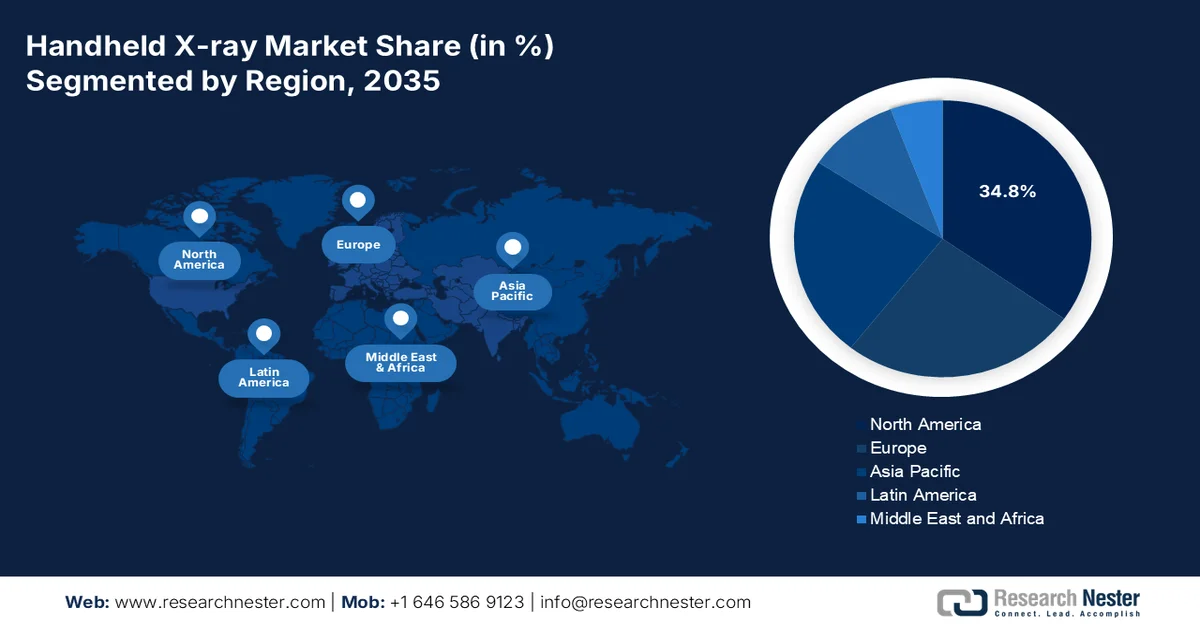
- North America is projected to command 34.8% of the share by 2035, underpinned by expanding home healthcare services, supportive reimbursement frameworks, and rising demand for point-of-care diagnostics
- Asia Pacific is poised to register the fastest growth in the handheld x-ray market throughout 2026-2035, stimulated by healthcare infrastructure expansion, increasing telemedicine adoption, growing rare disease burden, and government-led diagnostic decentralization
Segment Insights:
- The dental sub-segment is expected to secure a dominant 93.5% share by 2035, buoyed by the escalating global burden of dental diseases and increasing deployment of dental X-ray systems
- The outpatient facilities segment is forecast to capture the second-largest share in the handheld x-ray market during 2026-2035, catalyzed by the transition toward decentralized value-based care and growing adoption of compact imaging solutions across ambulatory settings
Key Growth Trends:
- Increase of medical services and modernization
- Surge in veterinary telemedicine
Major Challenges:
- Reimbursement uncertainty and coding fragmentation
- Workflow resistance and radiologist reluctance
Key Players: GE Healthcare, Siemens Healthineers, Philips Healthcare, Canon Medical Systems, Fujifilm Holdings Corporation, Shimadzu Corporation, Hitachi Medical Corporation, Carestream Health, Hologic, Inc., Mindray Medical International Limited, Samsung Healthcare, Agfa-Gevaert Group, Varian Medical Systems, MinXray, Ziehm Imaging, OR Technology, Skanray, Delft Imaging, OXOS Medical, MORITA Corporation, Lumitron Technologies, Inc., Turner Imaging Systems.
Global Handheld X-ray Market Forecast and Regional Outlook:
Market Size & Growth Projections:
- 2025 Market Size: USD 1.3 billion
- 2026 Market Size: USD 1.4 billion
- Projected Market Size: USD 4 billion by 2035
- Growth Forecasts: 12.1% CAGR (2026-2035)
Key Regional Dynamics:
- Largest Region: North America (34.8% Share by 2035)
- Fastest Growing Region: Asia Pacific
- Dominating Countries: United States, Germany, Japan, China, Canada
- Emerging Countries: South Korea, India, Singapore, Australia, Saudi Arabia
Last updated on : 2 June, 2026
Handheld X-ray Market - Growth Drivers and Challenges
Growth Drivers
- Increase of medical services and modernization: Emergency response agencies are increasingly replacing fragile and heavy tube-specific X-ray units with suitable alternatives, which is driving the global handheld X-ray market. These X-ray devices are suitable for conducting routine imaging across hospitals, with a difference in cost-efficiency. According to official statistics published by NLM in February 2025, the pricing strategy of routine X-rays amounted to USD 44.4 per X-ray, which further led to an overall spending of USD 43,770.2 for 984 X-ray units. In addition, this eventually corresponds to USD 8,754.0 per detected complication. Therefore, the integration of a symptom-driven imaging approach is crucial for diminishing such unnecessary healthcare expenses, improving resource allocation, and lowering patient radiation exposure, thus enhancing the handheld X-ray market growth.
- Surge in veterinary telemedicine: This particular segment has emerged as an unexpected but powerful growth driver for the handheld X-ray market globally. Large-scale animal veterinarians treating horses, cattle, and zoo animals cannot transport sedated patients to fixed X-ray suites. Handheld devices enable field-based imaging of equine limbs, bovine skulls, and exotic animal dentition. Concurrently, pet telemedicine has created demand for in-home veterinary imaging, with mobile veterinarians currently performing arthritis and fracture assessments in clients' living rooms using handheld X-ray units. The technology is particularly valuable for euthanasia decision support, allowing owners to see radiographic evidence of terminal conditions before making end-of-life choices.
Challenges
- Reimbursement uncertainty and coding fragmentation: Healthcare providers face inconsistent and often inadequate reimbursement for examinations performed with handheld X-ray devices compared to fixed systems. In many public and private insurance frameworks, the technical component of an X-ray procedure, including the portion reimbursing equipment usage, assumes the cost structure of a fixed, room-based system with dedicated staff, lead-lined walls, and regular physicist inspections. Besides, handheld devices have lower capital and facility costs, yet insurers have not established separate, appropriate reimbursement tiers for portable imaging. Consequently, providers billing for handheld examinations often receive the same payment as fixed-system exams, creating margin compression for facilities that invested in portability, thus negatively impacting the handheld X-ray market growth.
- Workflow resistance and radiologist reluctance: The most human-centered challenge in the handheld X-ray market involves resistance from two critical stakeholder groups: radiologic technologists who fear job displacement and radiologists who distrust image quality from non-traditional sources. Experienced technologists have spent years mastering positioning techniques on fixed systems with standardized control interfaces. Moreover, handheld devices require different handling, with operators having to physically hold the unit against or near the patient, increasing their own radiation exposure risk and requiring awkward body mechanics that lead to repetitive strain injuries. Simultaneously, many technologists simply refuse to use handheld devices, citing occupational safety concerns or professional autonomy.
Handheld X-ray Market Size and Forecast:
| Report Attribute | Details |
|---|---|
|
Base Year |
2025 |
|
Forecast Year |
2026-2035 |
|
CAGR |
12.1% |
|
Base Year Market Size (2025) |
USD 1.3 billion |
|
Forecast Year Market Size (2035) |
USD 4 billion |
|
Regional Scope |
|
Handheld X-ray Market Segmentation:
Application Segment Analysis
The dental sub-segment, part of the application segment, is anticipated to garner the largest share of 93.5% in the handheld X-ray market by the end of 2035. The sub-segment’s upliftment is primarily driven by significantly referring to physical dental restorations, such as implants and crowns, or a software application utilized for oral health. According to official statistics published by NLM in September 2025, dental conditions, including oral cancers, tooth loss, periodontal disease, and dental caries, affect nearly 3.5 billion people globally. Besides, dental caries tends to impact an estimated 2.5 billion people, while critical periodontal disease affects approximately 1 billion people. In addition, across low and middle-income nations, roughly 90% of caries cases remain untreated, in comparison to 30% to 50% in high-income nations. Therefore, these incidents have effectively led to an increase in the shipment of dental X-ray machines, thus proliferating the sub-segment’s growth.
2024 Dental X-ray Machines Global Export and Import Analysis
|
Countries/Components |
Export (USD) |
Import (USD) |
|
South Korea |
252.0 million |
- |
|
Finland |
173.0 million |
- |
|
Germany |
72.6 million |
- |
|
U.S. |
- |
174.0 million |
|
France |
- |
53.5 million |
|
Russia |
- |
30.1 million |
|
Global Trade Valuation |
738.0 million |
|
|
Global Trade Share |
0.005% |
|
|
Product Complexity |
1.3 |
|
Source: OEC
End use Segment Analysis
Based on the end use, the outpatient facilities segment is projected to grab the second-largest share in the handheld X-ray market during the forecast period. The segment’s growth is effectively fueled by comprising urgent care centers, ambulatory surgical centers (ASCs), dental clinics, and orthopedic practices, which are emerging as the most dynamic end-user segment for handheld X-ray devices. Besides, the primary driver is the structural shift toward value-based, decentralized care. Unlike hospitals burdened by capital expenditure and space constraints, outpatient clinics prioritize compact, battery-powered devices that eliminate the need for dedicated lead-lined rooms. Moreover, handheld units reduce patient wait times by enabling bedside imaging, which improves throughput, thus indicating a critical metric for ASCs and urgent care networks.
Technology Segment Analysis
By the end of the stipulated timeline, the digital X-ray sub-segment, which is part of the technology segment, is expected to account for a considerable share of the handheld X-ray market. The sub-segment’s development is highly propelled by its role as a modernized medical imaging technique that utilizes electronic sensors instead of conventional photographic film for capturing internal body images. As stated in an article published by Collective Minds Health Organization in November 2024, approximately 3.6 billion diagnostic medical examinations, including X-rays, are performed annually. Additionally, an estimated 350 million of these procedures are readily conducted on children aged 15 years. Besides, with modernization and digitalization in healthcare systems, the rate of radiography, as a digitalized tool, has significantly increased to 783 examinations per 1,000 patients, thus enhancing the sub-segment’s growth.
Our in-depth analysis of the handheld X-ray market includes the following segments:
|
Segment |
Subsegments |
|
Application |
|
|
End use |
|
|
Technology |
|
|
Type |
|
|
Device Type |
|
|
Component |
|

Vishnu Nair
Head - Global Business DevelopmentCustomize this report to your requirements — connect with our consultant for personalized insights and options.
Handheld X-ray Market - Regional Analysis
North America Market Insights
North America in the handheld X-ray market is anticipated to account for the highest share of 34.8% by the end of 2035. The market’s upliftment in the region is primarily attributed to the presence of innovative healthcare facilities, suitable reimbursement policies, an increase in the demand for point-of-care diagnostics, and an expansion in home healthcare, care centers, and nursing homes. According to official statistics published by the USDA Government in March 2025, there has been the successful establishment of home healthcare services, which have significantly witnessed steady growth since the third quarter of 2023, with a 36% surge in establishments. In addition, the number of skilled nursing facilities across rural locations in the region increased by 1.5% in the same year, thereby proliferating the market’s growth in the overall region.
The handheld X-ray market is growing significantly in the U.S., owing to an expansion in reimbursement services under Medicaid and Medicare, along with an acceleration in site-neutral payment reforms for migrating from hospital to mobile and outpatient imaging, and a focus on workforce optimization through the AI implementation. As stated in an article published by the NCBI in 2025, an analytical study was conducted on a patient pool of 348,214,053, insured with Medicare fee-for-service, commercial insurance, and Medicaid, to project the imaging utilization in the country by the end of 2055. Based on the analysis, it was demonstrated that imaging utilization is expected to reach 26.9% from 16.9% in comparison to 2023. In addition, depending on usage continuation through 2030, the range is further projected to surge from 5.6% to more than 45.2%, thus positively impacting the handheld X-ray market growth in the country.
The increased focus on modernizing the public healthcare system, the availability of CT scan and portable X-ray devices, an expansion in provincial investment, especially in Alberta, British Columbia, and Ontario, an acceleration in digital transformations, aging demographics, suitable health and medical frameworks, and a rise in chronic diseases are certain factors that are boosting the handheld X-ray market in Canada. As per an article published by the Canadian Association of Radiologists (CAR) in November 2025, the Budget 2025 proposed USD 5 billion as an investment for more than 3 years for supporting health and hospital-based infrastructure, which aligned with CAR’s offering of USD 2 billion for modernizing the country’s radiology equipment. Moreover, the budget also unveiled USD 925.6 million in a sovereign public AI facility, which also complemented the USD 50 million investment proposal in the Health Artificial Intelligence Validation Network (HAIVN), thus bolstering the market in the country.
APAC Market Insights
The Asia Pacific in the handheld X-ray market is expected to emerge as the fastest-growing region during the forecast period. The market’s development in the region is highly propelled by rapid expansion in healthcare and medical centers, a rise in medical tourism, an increase in government strategies for decentralizing diagnostic services, a rise in the aging population and rare diseases, and a surge in telemedicine adoption. According to official statistics published by the World Economic Forum in February 2026, there are almost 400 million people residing with rare disorders globally, of which 250 million are located in the region. Therefore, to combat this, there has been the establishment of 28 facilities in South Korea for patients suffering from neurofibromatosis type 1, and ensuring an MRI scanning facility for patients with a 6 to 8-month waiting period, thereby denoting a huge growth opportunity for the market in the region.
The handheld X-ray market is gaining increased traction in China, owing to the increased availability of diagnostic devices, innovative technologies, healthcare infrastructure, the government’s Healthy China 2030 approach, and a surge in different applications. Besides, as stated in an article published by the State Council Information Office in March 2026, the country’s AI industry successfully reached almost USD 174 billion as of 2025, which led to the adoption of big data, the Internet of Things (IoT), and 5G in healthcare services. In this regard, and as per the March 2026 NLM article, an overall 154 AI-based medical devices were approved in the country in June 2025. In addition, the yearly numbers recorded an upward trend from 9 devices in 2020, 16 in 2021, 26 in 2022, 38 in 2023, and 45 in 2024. Therefore, the yearly growth rate of such devices was 49.5%, thus proliferating the market development in the country.
The aspects of the national health insurance system, medical services, the yearly revision of health technology assessment, the existence of government initiatives and policies for readily supporting medical innovation, and suitable organizational collaboration are a few trends that are responsible for boosting the handheld X-ray market in Japan. The Japan handheld X-ray market was valued at USD 71 million as of 2025, which is further predicted to be worth USD 79.8 million by 2026, and eventually reach USD 230.5 million, along with a 12.5% growth rate by 2035. As per a data report published by the PMDA Organization in September 2025, the medical device industry is predicted to increase by almost 1.3 times by the end of 2027. Besides, in terms of medical device organizations, 7 of the top 20 domestic companies have readily extended overseas sales by more than 50%. Moreover, research and development (R&D) funding through the government is also denoting an optimistic outlook for medical devices in the country.
Government R&D Support for Medical Devices in Japan, 2024-2029
|
Stage |
Program name |
Timeframe |
Budget |
Main audience |
Purpose |
|
Basic Research |
Next-Generation Health Tech Startup Development Support Project |
2024 to 2028 |
2024: USD 3.7 million (JPY 600 million) |
Startups |
Support provision for conducting early-stage research to assist startups in growing and building momentum. |
|
Applied-Based Research |
Next-Generation Medical Devices Development Promotion Project |
2025 to 2029 |
2025: USD 16.8 million (JPY 2,400 million) |
Startups / SMBs / Major companies |
Increased focus on the development of innovative medical devices and systems. |
|
Preclinical/Clinical |
Medical-Engineering Collaboration for Global Expansion Project |
2025 to 2029 |
2025: USD 9.3 million (JPY 1,400 million) |
Startups / SMBs |
Encouraging suitable cooperation among SMEs, universities, and medical institutions, and assisting in overseas expansion. |
|
Post-Launch |
Project to Accelerate the Development and Adoption of Digital Healthcare Products |
2025 |
2024 supplementary budget: USD 6.1 million (JPY 920 million) |
Startups |
Supporting the evaluation of the economic value of introducing SaMD. |
Source: PDMA Organization
Europe Market Insights
Europe in the handheld X-ray market is projected to witness considerable growth and expansion by the end of the stipulated timeline. The market’s growth in the region is effectively driven by the tactical decentralization of healthcare services, the rapid incorporation of AI-based digitalized radiography systems, stringent radiation compliance reforms, community and diagnostic strategies, and a rise in the prevalence of orthopedic diseases. According to official statistics published by OECD in February 2026, the healthcare industry accounted for a 10.4% of gross domestic product (GDP) in the region and also employed over 10% of the workforce. Besides, in terms of AI adoption for imaging techniques, Radiobotics, located in Copenhagen, utilizes deep-learning models that are trained on images from over 1,300 hospitals to flag dislocations, subtle trauma signs, and fractures on plain X-rays within a short duration. Therefore, this particular factor has led to an increase in trade dynamics of X-ray equipment, thereby enhancing the market exposure in the region.
2024 X-Ray Equipment Regional Export and Import Analysis
|
Countries |
Export (USD) |
Import (USD) |
|
Germany |
5.6 billion |
1.5 billion |
|
Netherlands |
2.3 billion |
1.4 billion |
|
France |
1.2 billion |
1.2 billion |
|
UK |
1.1 billion |
689.0 million |
|
Italy |
591.0 million |
551.0 million |
|
Switzerland |
393.0 million |
240.0 million |
|
Finland |
315.0 million |
116.0 million |
|
Belgium |
276.0 million |
327.0 million |
|
Austria |
244.0 million |
160.0 million |
|
Czechia |
209.0 million |
118.0 million |
Source: OEC
The handheld X-ray market is gaining increased exposure in Germany, owing to an increase in the highly intensive care unit density, stringent radiation compliance standards, digital maturity in healthcare, a strong medical device manufacturing ecosystem, and the existence of a suitable reimbursement landscape. Based on government estimates published by the ITA in August 2025, the medical device industry in the country accounts for approximately USD 44 billion in yearly revenue, making up 26.5% of the regional sector. Besides, 1 out of 6 employment opportunities in the country is associated with the healthcare industry, significantly generating a yearly economic footprint of USD 838 billion or an estimated 12.8% of the domestic GDP. Moreover, as of 2024, the gross value added (GVA) of the industry amounted to USD 496 billion, which corresponds to 11.5% of the overall domestic economy, thereby driving the handheld X-ray market growth.
German Medical Equipment Industry Analysis, 2022-2025
|
Components (USD Billion) |
2022 |
2023 |
2024 |
2025 |
|
Overall Exports |
27.1 |
30.0 |
31.0 |
36.4 |
|
Overall Imports |
24.0 |
25.3 (estimated) |
26.0 |
27.5 (estimated) |
|
U.S.-Based Imports |
5.2 |
5.6 (estimated) |
6.0 |
6.4 (estimated) |
|
Exchange Rates |
1.05 |
1.08 |
1.082 |
1.07 |
Source: ITA
The strategic pivot toward community-driven diagnostics, the substantial demand for portable imaging solutions, care-home imaging approaches, the digital transformation agenda, and the presence of a regulatory environment are a few factors that are enhancing the handheld X-ray market in the UK. As per an article published by Clinical Radiology in December 2025, there was an increase in CT activity by 60% or an average 6% per annum, along with MRI by 31% or 3% per annum between 2023 and 2024. Moreover, domestic outpatient requests effectively accounted for 63% of MRI, with inpatients and general practitioner direct accessibility accounting for almost 16%. Besides, MRI of the head catered to 25% of total activity in the same period, along with radiology, constituting the largest proportion, thereby making it suitable for driving the market expansion in the country.
Key Handheld X-ray Market Players:
- GE Healthcare (U.S.)
- Siemens Healthineers (Germany)
- Philips Healthcare (Netherlands)
- Canon Medical Systems (Japan)
- Fujifilm Holdings Corporation (Japan)
- Shimadzu Corporation (Japan)
- Hitachi Medical Corporation (Japan)
- Carestream Health (U.S.)
- Hologic, Inc. (U.S.)
- Mindray Medical International Limited (China)
- Samsung Healthcare (South Korea)
- Agfa-Gevaert Group (Belgium)
- Varian Medical Systems (U.S.)
- MinXray (U.S.)
- Ziehm Imaging (U.S.)
- OR Technology (Germany)
- Skanray (India)
- Delft Imaging (Netherlands)
- OXOS Medical (U.S.)
- MORITA Corporation (Japan)
- Lumitron Technologies, Inc. (U.S.)
- Turner Imaging Systems (U.S.)
- Company Overview
- Business Strategy
- Key Product Offerings
- Financial Performance
- Key Performance Indicators
- Risk Analysis
- Recent Development
- GE Healthcare focuses on integrating its handheld X-ray market devices with cloud-based imaging platforms to enhance workflow efficiency. The company continues to prioritize technological interoperability for point-of-care diagnostic applications.
- Siemens Healthineers leverages its in-depth expertise in medical imaging to develop portable X-ray solutions suitable for demanding clinical environments. The company emphasizes rugged device design and software-driven image optimization for bedside use.
- Philips Healthcare aligns its portable X-ray portfolio with the broader shift toward decentralized and home-based care delivery. The company invests in lightweight, battery-operated systems that integrate seamlessly with existing hospital information networks.
- Canon Medical Systems applies its sensor and detector technology expertise to produce compact handheld X-ray devices. The company targets applications in emergency medicine and orthopedics where portability is essential.
- Fujifilm Holdings Corporation leverages its longstanding experience in digital radiography to develop portable X-ray systems for diverse clinical settings. The company focuses on delivering high image quality through advanced detector technology in a handheld form factor.
Here is a list of key players operating in the global handheld X-ray market:
The global handheld X-ray market is characterized by the presence of several established medical imaging giants and innovative specialized manufacturers. Besides, North America and Europe currently hold significant market shares, driven by technological advancements and high healthcare spending. Key strategic initiatives among leading players include a strong focus on product innovation, such as the development of AI-assisted imaging and ultra-lightweight wireless devices. For instance, in November 2025, Canon Medical Systems Corporation launched Mobirex i9/Smart Edition, which is a high-end mobile-based X-ray system that is readily enhanced with radiography support functions. Therefore, with such product launches by companies, there is a huge growth opportunity for the handheld X-ray industry across different regions.
Corporate Landscape of the Handheld X-ray Market:
Recent Developments
- In February 2025, Lumitron Technologies, Inc. proclaimed the U.S. Food & Drug Administration (FDA) approval of its very own HyperVIEWTM X-Ray system that utilizes the K-Edge subtraction technique for enabling contrast-enhanced imaging for the diagnosis of breast cancer.
- In January 2025, OXOS Medical® declared that its MC2 Portable X-ray System has achieved FDA 510(k) clearance and is significantly available for commercialization, permitting health and medical practitioners to simplify the X-ray procedure.
- In June 2024, Turner Imaging Systems unveiled its newest ENDURO DR™, which is considered the most versatile and accessible X-ray system for removing conventional barriers.
- Report ID: 8597
- Published Date: Jun 02, 2026
- Report Format: PDF, PPT
- Explore a preview of key market trends and insights
- Review sample data tables and segment breakdowns
- Experience the quality of our visual data representations
- Evaluate our report structure and research methodology
- Get a glimpse of competitive landscape analysis
- Understand how regional forecasts are presented
- Assess the depth of company profiling and benchmarking
- Preview how actionable insights can support your strategy
Explore real data and analysis
Frequently Asked Questions (FAQ)
About this Report
Connect with our Expert


Report, 2026-2035



Copyright @ 2026 Research Nester. All Rights Reserved.
