Feed Prebiotics Market Outlook:
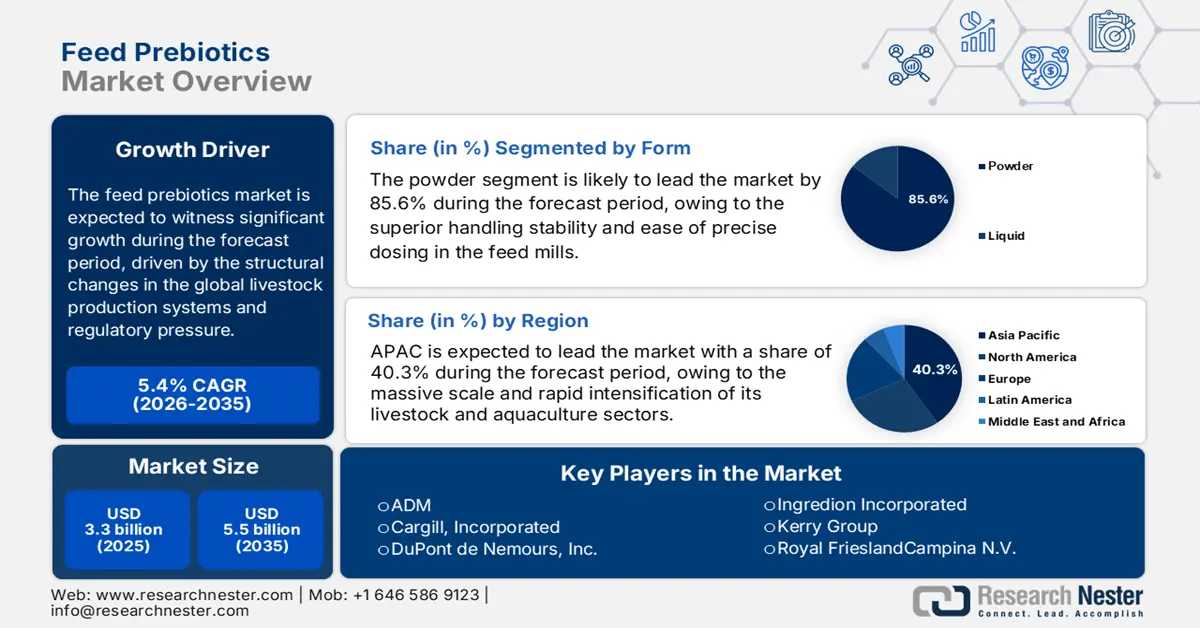
Feed Prebiotics Market size was valued at USD 3.3 billion in 2025 and is projected to reach USD 5.5 billion by the end of 2035, rising at a CAGR of 5.4% during the forecast period, i.e., 2026-2035. In 2026, the industry size of feed prebiotics is evaluated at USD 3.4 billion.
The market is shaped primarily by the structural changes in the global livestock production systems and regulatory pressure to reduce the non-therapeutic use. Government and intergovernmental data show a sustained growth in the commercial animal protein output that directly drives the demand for the functional feed inputs. The FAO data in 2023 has indicated that the meat production globally has reached 364 million in 2023, with poultry accounting for the fastest growing share due to the shorter production cycle and higher feed conversion efficiency. The poultry and swine systems are also the most exposed to antimicrobial resistance mitigation policies. The WHO has formally classified antimicrobial resistance as a top public health threat, prompting national action plans that restrict the use of antibiotic growth promoters in animal feed.
On the demand side, the livestock health economics and the feed efficiency metrics underpin the purchasing decisions. The NLM study in April 2022 reports that the feed costs represent 60% to 85% of the total livestock production costs in intensive systems, making marginal improvements in feed utilization commercially significant. The FAO data indicate that enteric diseases and poor gut health remain the leading causes of productivity loss, mainly in weaned piglets and broilers, where the early life nutrition directly impacts mortality and average daily gain. The prebiotic inclusion aligns with the national animal health objectives focused on reducing the disease burden without increasing the veterinary drug expenditure. Further, the government-backed food safety frameworks, including the Codex Alimentarius standards, emphasize the preventative health measures at the feed level to protect downstream food supply chains.