Butylated Hydroxytoluene Market Outlook:
Butylated Hydroxytoluene (BHT) Market size was valued at USD 256.94 billion in 2025 and is set to exceed USD 455.82 billion by 2035, registering over 5.9% CAGR during the forecast period i.e., between 2026-2035. In the year 2026, the industry size of butylated hydroxytoluene is estimated at USD 270.58 billion.
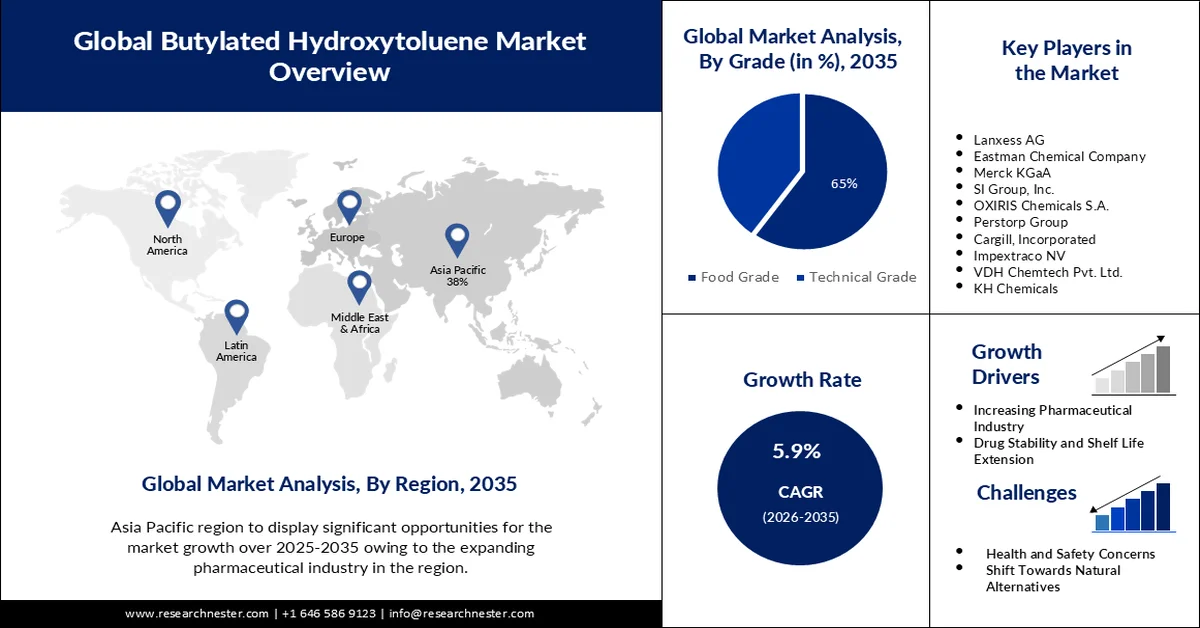
Butylated hydroxytoluene (BHT) is a synthetic antioxidant widely used in various industries, including food, cosmetics, pharmaceuticals, and plastics. It is commonly used as a preservative to extend the shelf life of products and prevent oxidative degradation. BHT works by inhibiting the formation of free radicals, which can cause spoilage, rancidity, or degradation of the products it is added to.
The food and beverage industry are one of the major consumers of BHT. As consumers seek longer-lasting and safe food products, the demand for BHT as a food preservative has increased. It helps prevent oxidation in fats and oils, enhancing the stability of various food products. BHT is used in cosmetics and personal care products like lipsticks, lotions, and creams to prevent the oxidation of oils and fats. The rising demand for beauty and personal care products contributes to the growth of the BHT market.
Key Butylated Hydroxytoluene (BHT) Market Insights Summary:
Regional Insights:
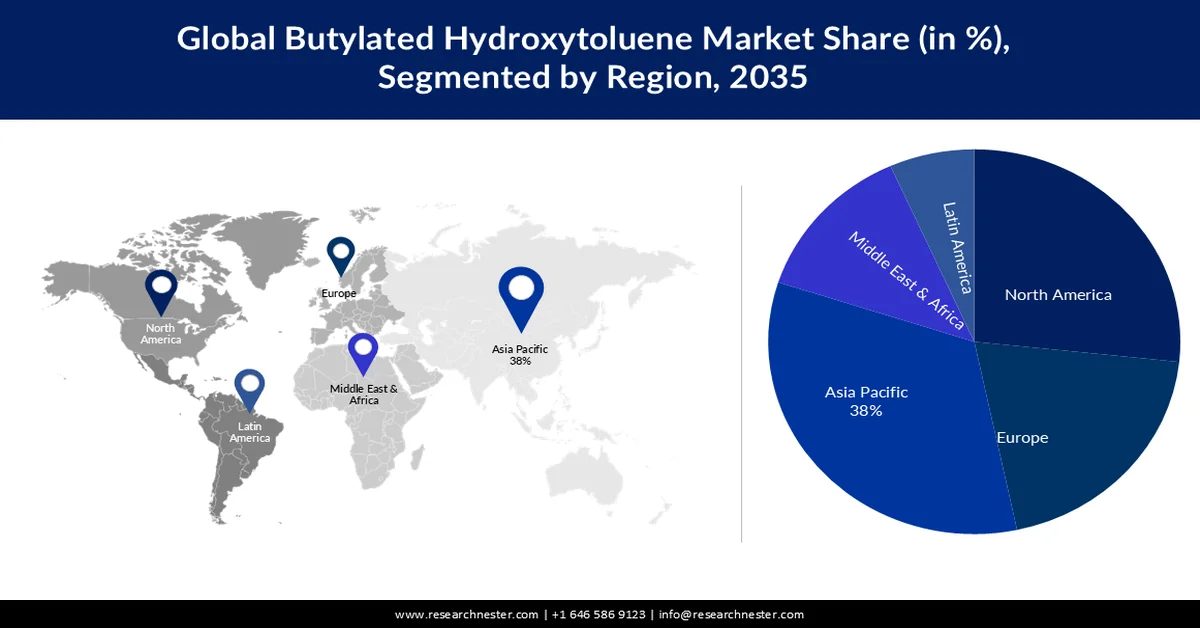
- Asia Pacific is anticipated to command 38% share of the butylated hydroxytoluene (bht) market by 2035, attributed to extensive utilization of BHT across plastics and rubber manufacturing supported by the region’s dominant production capacity.
- North America is projected to secure the second-largest share of the butylated hydroxytoluene (bht) market by 2035, fueled by rising demand for packaged and processed foods aimed at minimizing food waste.
Segment Insights:
- Food Grade segment is estimated to account for 65% share of the butylated hydroxytoluene (bht) market by 2035, propelled by its widespread adoption as a food preservative to prevent oxidation and extend shelf life.
- Pharmaceuticals segment is expected to capture a significant share of the butylated hydroxytoluene (bht) market by 2035, supported by its increasing application as an antioxidant to enhance drug stability and shelf life.
Key Growth Trends:
- Increasing Demand in the Food Industry
- Expanding Cosmetic and Personal Care Industry
Major Challenges:
- Health and Safety Concerns
- Shift Towards Natural Alternatives
Key Players: Baxter International Inc., AngioDynamics Inc., B. Braun Melsungen AG, Fresenius Medical Care AG and Co., Becton Dickinson and Co., Thermo Fisher Scientific Inc., JMS Co. Ltd, Nipro Corporation, Nikkiso Co. Ltd..
Global Butylated Hydroxytoluene (BHT) Market Forecast and Regional Outlook:
Market Size & Growth Projections:
- 2025 Market Size: USD 256.94 billion
- 2026 Market Size: USD 270.58 billion
- Projected Market Size: USD 455.82 billion by 2035
- Growth Forecasts: 5.9% CAGR (2026-2035)
Key Regional Dynamics:
- Largest Region: Asia Pacific (38% Share by 2035)
- Fastest Growing Region: Asia Pacific
- Dominating Countries: China, United States, Germany, Japan, India
- Emerging Countries: China, India, Japan, South Korea, Thailand
Last updated on : 25 February, 2026
Butylated Hydroxytoluene (BHT) Market - Growth Drivers and Challenges
Growth Drivers
- Increasing Demand in the Food Industry: BHT is widely used as a food preservative to extend the shelf life of various food products, including oils, fats, and snacks. The global food preservatives sales, of which BHT is a significant part, was valued at around USD 2.5 billion in 2020.
- Expanding Cosmetic and Personal Care Industry: The beauty and personal care industry's growth has led to an increased demand for BHT in cosmetics and personal care products.
- Increasing Health and Wellness Awareness: Consumers' growing concerns about food safety and product quality have led to a higher demand for BHT as a food preservative, particularly in the context of extending shelf life and maintaining product freshness.
Challenges
- Health and Safety Concerns: There have been concerns and debates about the potential health risks associated with BHT consumption. Some studies have suggested that high levels of BHT intake may be linked to adverse health effects, including potential endocrine disruption and other health issues. As a result, there has been increased scrutiny from regulatory authorities and consumer advocacy groups, leading to calls for further research and potential restrictions on its use.
- Shift Towards Natural Alternatives
- Regulatory Changes
Butylated Hydroxytoluene (BHT) Market Size and Forecast:
| Report Attribute | Details |
|---|---|
|
Base Year |
2025 |
|
Forecast Year |
2026-2035 |
|
CAGR |
5.9% |
|
Base Year Market Size (2025) |
USD 256.94 billion |
|
Forecast Year Market Size (2035) |
USD 455.82 billion |
|
Regional Scope |
|
Butylated Hydroxytoluene (BHT) Market Segmentation:
Grade Segment Analysis
The food grade segment is estimated to hold 65% share of the butylated hydroxytoluene market in the year 2035. As BHT is widely used in food products to prevent oxidation and extend shelf life, the Food Grade segment plays a crucial role in ensuring the quality and safety of various food items. According to a report, the global sales of packaged/processed foods and ready-to-eat meals reached USD 3.2 trillion in 2019, and this trend is expected to continue growing. BHT has been approved as a food additive by regulatory authorities worldwide, including the U.S. Food and Drug Administration (FDA) and the European Food Safety Authority (EFSA). This regulatory approval ensures the safe use of BHT as a food preservative. The Food and Agriculture Organization (FAO) estimates that approximately one-third of the world's food production is lost or wasted each year. Food preservatives like BHT can help reduce food spoilage and waste, contributing to sustainability efforts.
End User Segment Analysis
Butylated hydroxytoluene market from the pharmaceuticals segment is expected to garner a significant share in the year 2035. The Pharmaceuticals segment of Butylated Hydroxytoluene (BHT) is driven by several factors related to its use as an antioxidant and stabilizer in pharmaceutical products. BHT helps prevent drug degradation and maintain the quality and efficacy of pharmaceutical formulations. A study published in the International Journal of Pharmacy and Pharmaceutical Sciences demonstrated that BHT effectively increased the shelf life and stability of a drug formulation containing a sensitive active ingredient. According to the World Health Organization (WHO), over 50% of medicines are inappropriately stored, which can lead to decreased shelf life and efficacy. BHT's use in pharmaceutical formulations can help address this issue by maintaining drug stability.
Our in-depth analysis of the global BHT market includes the following segments:
|
Grade |
|
|
End User |
|

Vishnu Nair
Head - Global Business DevelopmentCustomize this report to your requirements — connect with our consultant for personalized insights and options.
Butylated Hydroxytoluene (BHT) Market - Regional Analysis
APAC Market Insights
The butylated hydroxytoluene market in the Asia Pacific region is projected to hold the largest revenue share of 38% by the end of 2035. BHT is widely used in various industries in the region, including food, cosmetics, pharmaceuticals, and plastics. The Asia Pacific region is a major hub for the production of plastics and rubber products. According to the Asia Petrochemical Industry Conference, the Asia Pacific accounted for approximately 50% of the global plastics production and consumption in 2019. BHT is used as an antioxidant in plastics and rubber to protect them from degradation caused by heat and UV radiation.
North American Market Insights
The butylated hydroxytoluene market in the North America region is projected to hold the second largest share during the forecast period. The concern for food waste reduction has led to the use of food preservatives like BHT to extend the shelf life of products, reducing food spoilage and waste. The prevalence of fast-food chains and convenience stores in North America drives the demand for processed and packaged foods. BHT is used to extend the shelf life of such products and maintain their quality during distribution and storage.
BHT has been approved as a food additive and cosmetic ingredient by regulatory authorities in North America, including the U.S. Food and Drug Administration (FDA) and Health Canada. This approval ensures its safe use in different industries. The North America region has a well-developed and diverse food and beverage industry. The demand for BHT as a food preservative is driven by the need to extend the shelf life of various food products, including oils, fats, and processed foods.
Butylated Hydroxytoluene (BHT) Market Players:
- Lanxess AG
- Company Overview
- Business Strategy
- Key Product Offerings
- Financial Performance
- Key Performance Indicators
- Risk Analysis
- Recent Development
- Regional Presence
- SWOT Analysis
- Eastman Chemical Company
- Merck KGaA
- SI Group, Inc.
- OXIRIS Chemicals S.A.
- Perstorp Group
- Cargill, Incorporated
- Impextraco NV
- VDH Chemtech Pvt. Ltd.
- KH Chemicals
Recent Developments
Lanxess and Eastman Chemical Company announced a partnership to develop sustainable polyurethanes. The two companies will work together to develop new polyurethanes that are based on renewable resources and that have a lower environmental impact. The goal of the partnership is to create polyurethanes that meet the performance requirements of customers while also being more sustainable.
Eastman Chemical Company reported strong earnings for the first quarter of 2023. The company's earnings per share were USD 2.22, which exceeded analysts' expectations of USD 2.05. Eastman's sales were USD 2.9 billion. The company's strong results were driven by strong demand for its products, particularly in the agricultural and specialty plastics markets.
- Report ID: 5137
- Published Date: Feb 25, 2026
- Report Format: PDF, PPT
- Explore a preview of key market trends and insights
- Review sample data tables and segment breakdowns
- Experience the quality of our visual data representations
- Evaluate our report structure and research methodology
- Get a glimpse of competitive landscape analysis
- Understand how regional forecasts are presented
- Assess the depth of company profiling and benchmarking
- Preview how actionable insights can support your strategy
Explore real data and analysis
Frequently Asked Questions (FAQ)
About this Report
Connect with our Expert


Report, 2026-2035



Copyright @ 2026 Research Nester. All Rights Reserved.
