Blood Pressure Monitors Market Outlook:
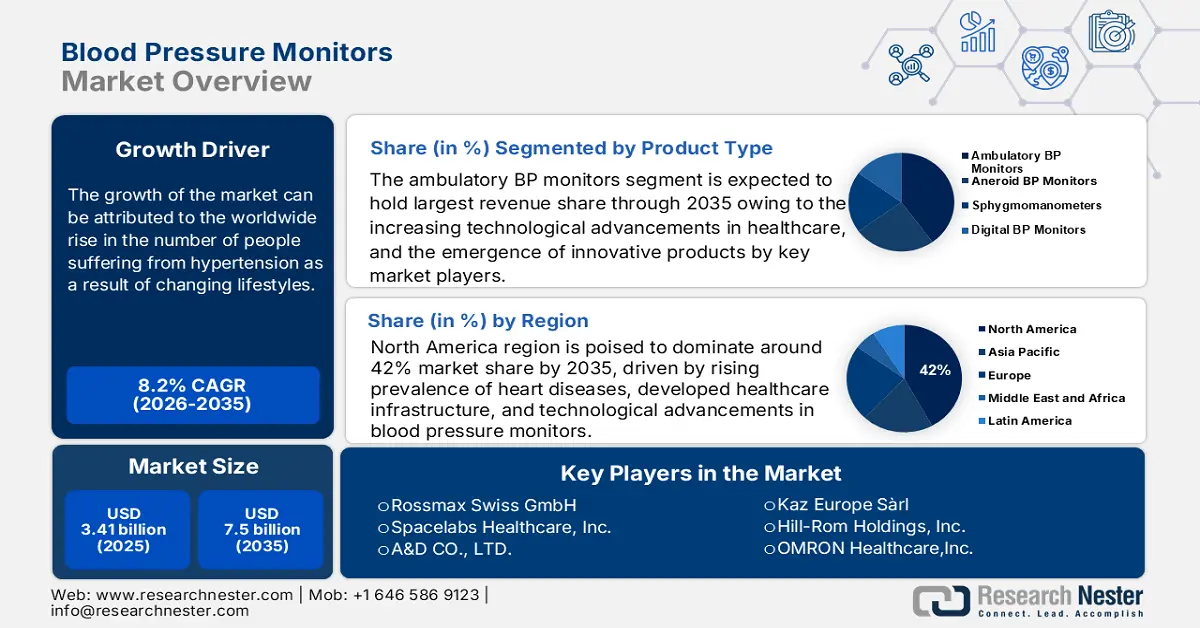
Blood Pressure Monitors Market size was over USD 3.41 billion in 2025 and is anticipated to cross USD 7.5 billion by 2035, growing at more than 8.2% CAGR during the forecast period i.e., between 2026-2035. In the year 2026, the industry size of blood pressure monitors is assessed at USD 3.66 billion.
The growth of the market can be attributed to the worldwide rise in the number of people suffering from hypertension as a result of changing lifestyles. The global population is becoming more occupied with their career and other hectic aspects of life and not paying attention to their mental health. According to the World Health Organization, as a result of hypertension, there is an increased likelihood of a heart attack, stroke, or kidney failure. It is estimated that there are 1.28 billion adults worldwide aged 30-79 years with hypertension, with 66% living in low- and middle-income countries. Further, the rapidly growing ratio of aged people, an increase in lifestyle-associated disorders, and increasing stress levels among people throughout the world are also expected to add to the market’s growth over the forecast period.
In addition to these, factors that are believed to fuel the market growth of blood pressure monitors include the rising cases of obesity & sedentary lifestyle, soaring penetration of mobile-based BP monitoring systems, and digital sphygmomanometers. Moreover, an increasing prevalence of diabetes is another prominent factor that is anticipated to accelerate global blood pressure monitors market growth over the forecast period. In addition, increasing awareness of routine checkups, increased purchasing power, and the popularity of wearable & portable devices, along with innovative product launches by key manufacturers are projected to drive global blood pressure monitors growth over the forecast period. For instance, in 2019, A&D Medical Company, a global leader in blood pressure monitoring solutions, launched a new line of professional blood pressure monitors that enable healthcare professionals to diagnose hypertension accurately and monitor blood pressure over time.