Blood Collection Monitor Market Outlook:
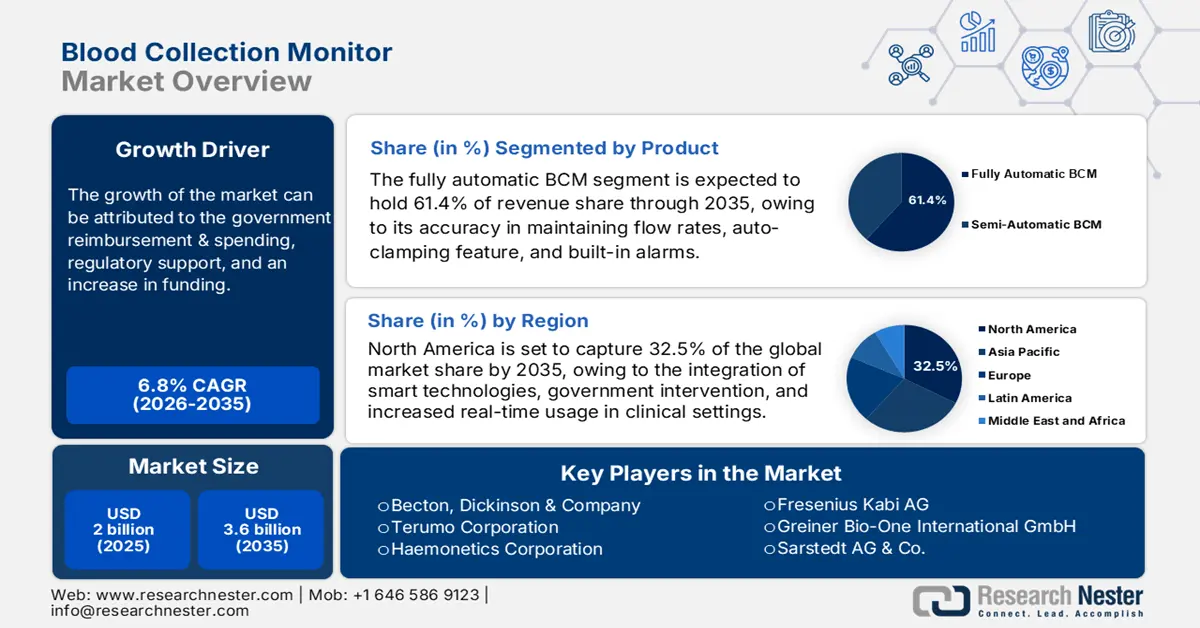
Blood Collection Monitor Market size was over USD 2 billion in 2025 and is estimated to reach USD 3.6 billion by the end of 2035, expanding at a CAGR of 6.8% during the forecast timeline, i.e., 2026-2035. In 2026, the industry size of blood collection monitor is estimated at USD 2.1 billion.
The amplifying burden of chronic ailments, such as cancer, kidney disorders, and cardiovascular diseases (CVDs), that require intensive surgeries for treatment, leads to a higher demand for blood transfusions. Testifying to the same, the Global Surgery 2030 report predicted approximately 30% of the worldwide disease burden to require surgical interventions. Thus, the dedicated healthcare authorities are now targeting a minimum of 5,000 procedures per 100,000 population, done in an operating room, to meet the growing needs during the same time period. Besides, more than 118.4 million blood donations were being collected every year worldwide till 2022, as per the American’s Blood Centers. This, coupled with the surge in blood safety and availability, further fuels the market.
The current dynamics of payers' pricing in the market are shaped by increasing cost-consciousness among healthcare providers. The amplifying pressure to demonstrate value-based outcomes from payers, including hospitals, government health systems, and private insurers, is demanding cost-effective solutions that offer both clinical efficiency and regulatory compliance. As a result, manufacturers are being pushed to offer competitive pricing models, such as bundled packages or value-based contracts, especially in large-scale tenders. Additionally, purchasing decisions are increasingly influenced by the total cost of ownership (TCO), which includes maintenance, durability, and integration capabilities.