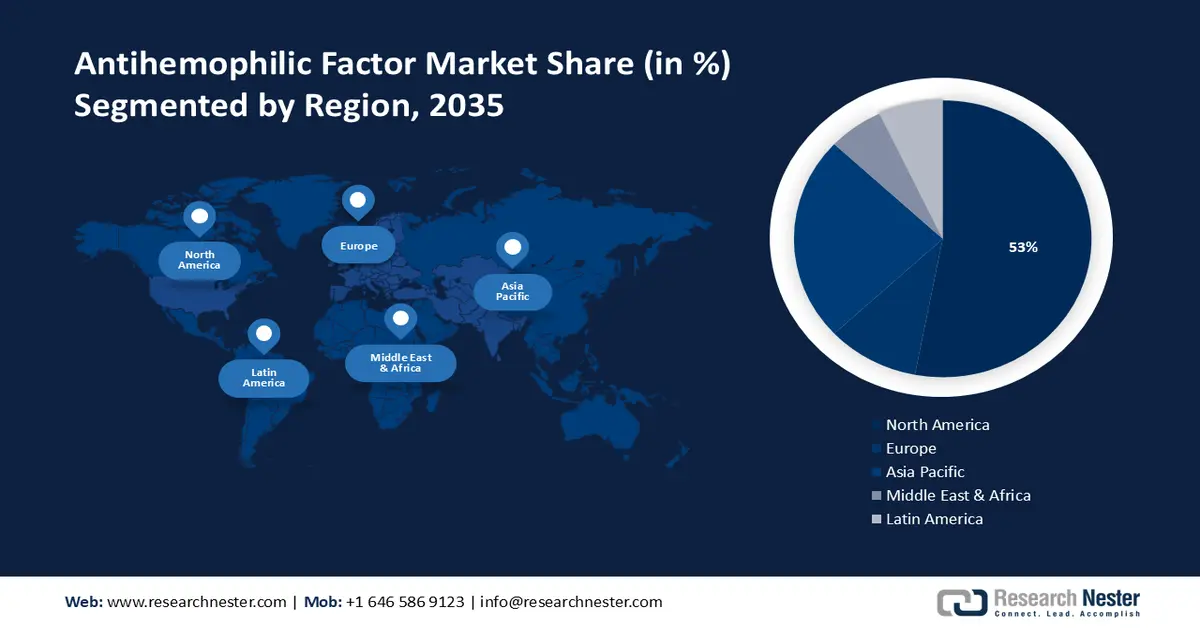
Antihemophilic Factor Market - Regional Analysis
North American Market Insights
North America industry is predicted to account for largest revenue share of 53% by 2035, on account of robust healthcare system, substantial investment in research and development, and the presence of leading pharmaceutical companies in the region.The market growth in the region is expected on account of a robust healthcare system, substantial investment in research and development, and the presence of leading pharmaceutical companies focused on innovative therapies for hemophilia. The region’s strong regulatory frameworks and supportive policies for biologics and advanced drug therapies are contributing factors to its dominant position. Furthermore, the rapid growth of the over 65% population in the United States, with its increased adoption of medicare advantage, could account for this change, projecting an increase from 44% in 2021 to about 54% penetration in the medicare population by 2030. Additionally, the improved profitability of managed Medicaid, due to more coordinated and integrated care, is likely to further enhance the market growth prospects.
European Market Insights
The Europe antihemophilic factor market is estimated to be the second largest, registering a share of about 24% by the end of 2035. The market’s growth is bolstered by high treatment-seeking rates, boosted by heightened awareness of hemophilia, well-established treatment protocols, and active patient organizations. Additionally, the region benefits from a sophisticated biotechnology sector and strategic partnerships between domestic and global pharmaceutical firms. Economic considerations also play a pivotal role, with the cost of severe hemophilia in five European countries reaching 2 billion in 2014, translating to nearly USD 300,000 per patient annually. With Germany bearing the highest per-patient costs at USD 300,000 and the UK, at the lower end at USD 200,000, the financial implications are vast and influence drug development and healthcare policy decisions across Europe’s diverse regions.