Advanced Glass Market Outlook:
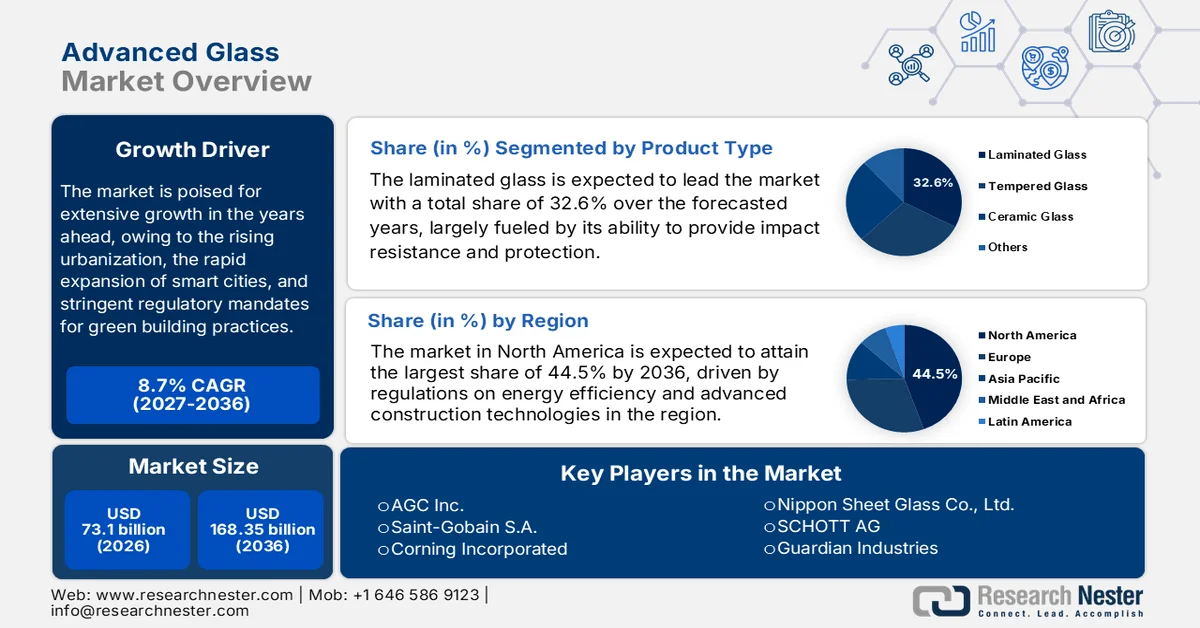
Advanced Glass Market size was over USD 73.1 billion in 2026 and is expected to reach USD 168.35 billion by the end of 2036, growing at around 8.7% CAGR during the forecast period, i.e., 2027-2036. In 2027, the industry size of advanced glass is evaluated at USD 79.46 billion.
Rising urbanization, the rapid expansion of smart cities, and stringent regulatory mandates for green building practices are the principal factors responsible for boosting the overall advanced glass market. According to the article published by Royal Society of Chemistry in January 2025, meeting the projected 3.4 TW annual solar PV installation target requires approximately 89 million tons of PV glass per year, whereas current global production is only around 24 Mt. Besides producing this glass demands substantial raw materials which includes 66 Mt of low-iron silica sand, 22.6 Mt of soda ash, 10.7 Mt of dolomite, and 10.4 Mt of limestone annually. The article also stated that, to scale production and meet this demand, there is an urgent need for expanding existing facilities, establishing new low-emission factories, and deploying recycling technologies to recover end-of-life glass.
Furthermore, the supply chain aspect also creates a significant impact, reshaping the pricing dynamics of the advanced glass market. As per the Organization for Economic Co-operation and Development reports, published in February 2026, about 1% to 2 % of global sand, gravel, and quartz was traded internationally, and the rest is domestically sourced. These materials are used across multiple industries, including glass, solar energy, and construction. Besides, the construction sector alone consumes around 30 billion tons of sand, gravel, and rocks annually and is a major driver of global sand and silicate demand, representing roughly 13 % of global GDP. Moreover, quartz and high-purity silicon from sand and silicates are highly essential for semiconductors and solar panels, with China producing around 95% of solar-grade polysilicon and 85% of global silicon metal in 2024, whereas OECD countries hold 65% of semiconductor-grade polysilicon and 85% of semiconductor-grade wafer production. Sand-based glass production reaches 40 million tons annually, serving sectors such as electronics, automotive, and infrastructure.
Key Advanced Glass Market Insights Summary:
Regional Highlights:
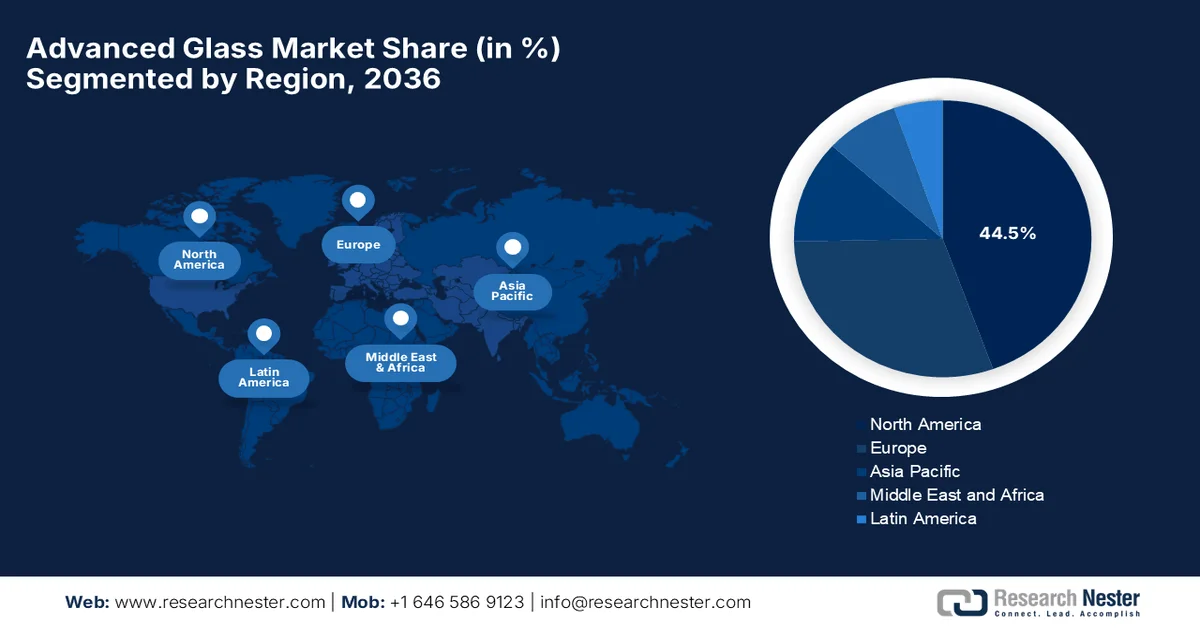
- North America is projected to dominate the advanced glass market with a 44.5% share by 2036, attributed to stringent energy efficiency regulations and advancements in construction technologies
- Asia Pacific is expected to witness the fastest growth in the forecast period 2027–2036, fueled by rapid urbanization and expanding construction activities
Segment Insights:
- Laminated glass segment in the advanced glass market is anticipated to account for a 32.6% share by 2036, propelled by its superior impact resistance and enhanced safety performance
- Solar control segment is likely to secure a significant revenue share during 2027–2036, impelled by increasing demand for energy-efficient buildings and effective UV filtration solutions
Key Growth Trends:
- Booming smart glass adoption
- Expansion in automotive applications
Major Challenges:
- High energy consumption in manufacturing
- Price sensitivity in emerging markets
Key Players: AGC Inc. (Japan), Saint-Gobain S.A. (France), Corning Incorporated (U.S.), Nippon Sheet Glass Co., Ltd. (Japan), SCHOTT AG (Germany), Guardian Industries (U.S.), PPG Industries, Inc. (U.S.), ?i?ecam Group (Turkey), Xinyi Glass Holdings Limited (China), Fuyao Glass Industry Group Co., Ltd. (China), Vitro, S.A.B. de C.V. (México), Central Glass Co., Ltd. (Japan), Taiwan Glass Industry Corporation (Taiwan), Cardinal Glass Industries (U.S.), Apogee Enterprises, Inc. (U.S.), Euroglas GmbH (Germany).
Global Advanced Glass Market Forecast and Regional Outlook:
Market Size & Growth Projections:
- 2026 Market Size: USD 73.1 billion
- 2027 Market Size: USD 79.46 billion
- Projected Market Size: USD 168.35 billion by 2036
- Growth Forecasts: 8.7% CAGR (2027-2036)
Key Regional Dynamics:
- Largest Region: North America (44.5% Share by 2036)
- Fastest Growing Region: Asia Pacific
- Dominating Countries: United States, China, Japan, Germany, South Korea
- Emerging Countries: India, Singapore, Brazil, Mexico, United Arab Emirates
Last updated on : 31 August, 2026
Advanced Glass Market - Growth Drivers and Challenges
Growth Drivers
- Booming smart glass adoption: Electrochromic, photochromic, and switchable glass are attracting investments since they have the capability to control light, heat, improving energy efficiency and user comfort. On the other hand, self-cleaning, anti-glare, UV protective, and low‑iron coatings expand glass performance, boosting adoption in the advanced glass market. For instance, in January 2025, Gauzy introduced its first-ever black suspended particle device smart glass at CES 2025, which is especially designed for automotive, aeronautics, and architectural applications. The innovation offers a neutral black appearance while maintaining SPD’s benefits, such as instant dimming, energy savings, and enhanced comfort, hence indicating a positive outlook for the market’s growth and exposure.
- Expansion in automotive applications: Manufacturers in the automotive sector utilize advanced glass for windshields, sunroofs, and safety windows with the main goal to improve fuel and energy efficiency and crash protection. Growth in EV production underscores the insatiable demand for lighter and multifunctional glass components. In November 2025, FORVIA HELLA introduced its first switchable intelligent glass ECU, which enables the adjustment of automotive glass transparency for applications such as panoramic sunroofs and side windows. The product has been in mass production in China since August 2025, and the ECU deliberately enhances comfort by optimizing natural light, sun protection, and privacy, while reducing energy usage and extending vehicle range. Hence, these consistent innovations from the leading pioneers will expand the advanced glass market into the growing automotive category.
- Electronics & consumer devices growth: There has been an extensive need for durable display glass in smartphones, tablets, lenses, and photonics are propelling huge demand for tough, high‑clarity glass. In March 2026, the article published by the SPIE Digital Library observed that in 2024, Schott successfully produced optical glass by using 100% hydrogen fuel, demonstrating a significant step toward sustainable glass manufacturing by reducing reliance on fossil fuels. It stated that glass is highly essential for lenses, prisms, and other photonics components, and is endlessly recyclable. In addition, efforts are in progress to improve recycling rates and establish a circular economy, with pilot programs repurposing waste glass into products such as road medians and asphalt, thus benefiting the overall advanced glass market.
Challenges
- High energy consumption in manufacturing: The production of advanced glass necessitates higher energy, which is influenced by the continuous furnace operations at higher temperatures. This in turn makes manufacturers in the advanced glass market highly vulnerable to fluctuations in natural gas and electricity prices, especially in regions that witness energy supply constraints. Meanwhile, making a shift to electric or hydrogen-based furnaces needs huge investments along with infrastructure upgrades, which many manufacturers might find challenging to justify in the short term. Therefore, the existence of this energy dependency not only raises production costs but also complicates long-term pricing strategies and profitability, creating hesitation among players to make investments in this sector.
- Price sensitivity in emerging markets: There has been a growing demand for advanced glass products, which are considered to be expensive when compared to conventional glass. Besides, in the case of emerging economies, where the construction and automotive sectors are extremely price-sensitive, the adoption of premium glass solutions is lower. Developers and manufacturers in the advanced glass market often prioritize cost over long-term efficiency benefits, which is ultimately slowing down market penetration. In addition, the lack of awareness about energy savings and durability advantages also causes restrictions to the heightened demand. Therefore, companies need to balance pricing strategies with value proposition, which can be difficult in competitive as well as cost-driven markets.
Advanced Glass Market Size and Forecast:
| Report Attribute | Details |
|---|---|
|
Base Year |
2026 |
|
Forecast Period |
2027-2036 |
|
CAGR |
8.7% |
|
Base Year Market Size (2026) |
USD 73.1 billion |
|
Forecast Year Market Size (2036) |
USD 168.35 billion |
|
Regional Scope |
|
Advanced Glass Market Segmentation:
Product Type Segment Analysis
The laminated glass is expected to lead the advanced glass market with a total share of 32.6% during the forecast period. The segment’s dominance is largely driven by its ability to provide impact resistance and protection, making it the most preferred choice for applications requiring reliable performance. In this context, Saint-Gobain Glass in February 2024 became the first manufacturer to achieve Cradle to Cradle Certified v4.0 across all five categories for its glass products. Besides, the certified ranges include float glass, magnetron-coated glass, ORAÉ, and laminated STADIP, produced at multiple sites in Europe. Hence, this boosts the overall segment’s growth by solidifying market confidence in laminated glass as a safe, durable, and environmentally responsible choice. In addition, this recognition also underscores the technological advancements in laminated glass production, such as improved interlayer materials and enhanced optical clarity.
Application Segment Analysis
Under the application segment, solar control is predicted to attain a significant revenue share in the advanced glass market during the stipulated timeframe. The segment’s growth is largely driven by its extensive use in energy-efficient buildings and environments requiring effective UV filtration. Its ability to reduce energy consumption and enhance occupant comfort makes it the preferred choice for modern construction. In July 2025, Lintec announced the launch of a solar control window film, i.e., BR-50UH RECYCLE 100, which is made entirely from 100% recycled PET resin. The film can be applied to glass surfaces in homes, offices, and commercial buildings, and the film reduces solar heat penetration, blocks more than 99% of UV rays, and minimizes glass shard scattering during breakage. Therefore, such expansion by key players is estimated to bolster the segment’s growth in the upcoming years.
End use Segment Analysis
By the conclusion of the forecast period, the construction industry is anticipated to grow with a considerable revenue share in the advanced glass market. The rising urbanization and green building initiatives are responsible for uplifting the segment’s growth and exposure. According to the article published by Green Business Certification Inc. in February 2023, India proactively promotes sustainable construction through various government incentives for green building projects. Developers of LEED-certified buildings can claim tax benefits, including 100% depreciation on green assets, and access low-interest loans through IREDA. The article also stated that certified projects benefit from fast-track approvals, reduced fees, and mandatory inclusion in public procurement policies. Furthermore, most of the states provide subsidies and exemptions, whereas renewable energy incentives deliberately support the adoption of eco-friendly building practices, hence denoting a wider segment scope.
Our in-depth analysis of the global advanced glass market includes the following segments:
|
Segment |
Subsegments |
|
Product Type |
|
|
Application |
|
|
End use |
|
|
Functionality |
|
|
Coating Type |
|

Vishnu Nair
Head - Global Business DevelopmentCustomize this report to your requirements — connect with our consultant for personalized insights and options.
Advanced Glass Market - Regional Analysis
North America Market Insights
North America advanced glass market is anticipated to lead the entire global dynamics with a total share of 44.5% by the end of the forecast duration. The regulations on energy efficiency and advanced construction technologies are responsible for driving the region’s dominance. On the other hand, rising R& D investments coupled with the presence of leading market pioneers also propel the sector’s growth. The National Institute of Standards and Technology in December 2024 stated that the Department of Commerce made a total investment of up to USD 75 million to Absolics for building a 120,000-square-foot facility in Georgia. This investment supports the development of advanced glass substrate technology for semiconductor packaging, enhancing chip performance for AI and high-performance computing while reducing power use and system complexity. In addition, it will expand the U.S. supply of glass substrates, hence making it suitable for standard advanced glass market growth.
A shift toward high-performance, multifunctional materials in the construction and automotive sectors is the main factor accelerating growth in the U.S. advanced glass market. The growth of the electric vehicle industry is efficiently driving demand for lightweight, high-strength glass. For instance, in August 2023, the U.S. Department of Energy (DOE) stated that Polyceed Inc., operating as Glass Dyenamics in Tucson, AZ, with support from the National Renewable Energy Laboratory, received a total of USD 381,381 in DOE funding to advance dynamic glazing technology. This project is focused on demonstrating solid electrolyte electrochromic devices and neutral coloring devices for building applications. In addition, these innovations enhance manufacturing readiness and readily improve product appeal through more desirable color options.
In Canada, the advanced glass market is sustaining strategic growth on account of extreme climate demands, which are driving a heavy focus on high-performance thermal insulation and energy-efficient building products. On the other hand, federal sustainability initiatives encourage the adoption of triple-glazing and low-emissivity coatings with a prime focus on minimizing heat loss during harsh winters. Based on the government data published in December 2024, Edgehog Advanced Technologies completed its project on nanostructured anti-reflection glass for solar panels and is supported by USD 750,000 from Canada’s Energy Innovation Program. Moreover, the company successfully scaled its nanotexturing process to larger soda-lime glass pieces, thereby enabling up to 25% more energy capture at wide angles and boosting overall solar output by 12%. Hence, such innovations lower costs, enhance, and strengthen Canada’s advanced glass adoption.
APAC Market Insights
The Asia Pacific advanced glass market is all set to witness exponential growth during the forecast period. The region’s leadership is largely driven by urbanization, rising disposable incomes, and an escalating construction industry. Meanwhile, leading countries such as China and Japan are making investments in terms of infrastructure and technology, boosting demand for advanced glass products. In January 2026, Singapore’s Building and Construction Authority stated that the Built Environment sector maintained steady construction demand at USD 36.9 billion in 2025. Construction output was valued at USD 30.4 billion in 2025, supported by major projects including Changi Terminal 5 and Marina Bay Sands expansion. The Productivity Solutions Grant (PSG) has supported more than 1,100 BE firms in the last six years, hence boosting the overall market’s growth in the region.
The prominence in global electronics and solar supply chains is boosting the advanced glass market in China. As a global manufacturing powerhouse, the country has registered itself as a predominant leader in the production of photovoltaic glass for solar panels and specialized ultra-thin glass for the massive consumer electronics sector, including smartphones and tablets. In this context, China, in March 2022, launched the National Innovation Center for Advanced Glass Materials along with the CNBM Research Institute for Advanced Glass Materials. These institutions focus on developing advanced glass technologies for areas such as information display, new energy, and energy-saving applications. This is the first national-level manufacturing innovation hub for the glass industry under China’s 14th Five-Year Plan, hence driving the continued expansion of the country’s advanced glass industry.
In India, the advanced glass market is unfolding remarkable growth opportunities driven by the government’s supportive missions and the rise of the semiconductor industry. The push for solar energy is driving demand for specialized tempered, laminated, and photovoltaic glass. At the same time, rising awareness of electrochromic and smart glass that allows transparency for privacy and energy management also drives market adoption. In August 2025, the article published by Press Information Bureau (PIB) reported that 3D Glass Solutions Inc. set up a semiconductor facility in Bhubaneswar, Odisha, with a generous investment of about USD 233 million. The plant was designed to produce 70,000 glass panels annually along with 50 million ATMP units per year, strengthening India’s semiconductor ecosystem. This milestone marked a major step in India’s push for advanced chip packaging and manufacturing capabilities, making it suitable for bolstering the country’s market.
Europe Market Insights
Europe advanced glass market is predicted to retain its position as the second largest shareholder throughout the forecast duration. The region benefits from sustainability regulations and stringent carbon-neutrality agendas, which are encouraging recyclable glass utilization. The region is highly focused on circular economy practices, driving high demand for flat glass and ultra-efficient triple-glazing systems. As per an article published by the European Commission in March 2026, six projects from the IF24 reserve list have now been invited to prepare Grant Agreements, with a total funding of up to USD 532 million. Spread across six Member States, they cover sectors such as glass manufacturing, renewable energy components, electrolysers, lithium refining for EV batteries, and chemicals. The article underscored that together, they could cut around 20 million tons of CO₂ emissions in their first decade, hence denoting a lucrative growth opportunity for the region’s market.
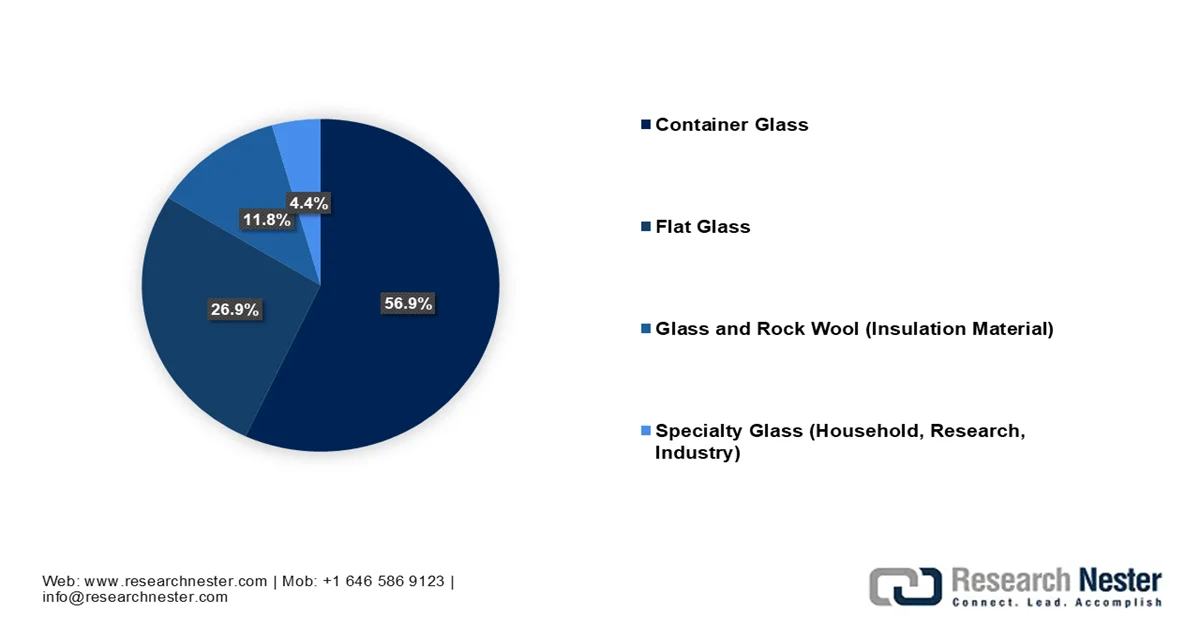
In Germany, the advanced glass market is supported by precision engineering and high-tech manufacturing. The architectural sector increasingly adopts building-integrated photovoltaics to turn glass facades into active power generators. At the same time, intense focus on Industry 4.0 digitalization and strict sustainability regulations further stimulate growth in the country’s market. In November 2025, the country’s Environmental Agency (UBA) stated that Germany produced around 6.6 million tons of glass in 2024, including 1.7 million tons of flat glass and 292,500 tons of specialty glass. The article outlines that glass can be recycled indefinitely, saving energy, i.e., about 0.2% to 0.3% per 1% cullet added and raw materials, provided proper sorting is maintained. Container glass recycling reached 84.6% in 2022, whereas end-of-life vehicle dismantlers processed 253,195 vehicles in 2023, generating around 8,900 tons of vehicle glass, thus benefiting the country’s advanced glass market expansion.
Glass Industry Distribution in Germany 2024, Production Share
Source: UBA
The rigorous future homes standards and the nation’s commitment to achieving net-zero carbon emissions are reshaping the growth dynamics of the advanced glass market in UK. In addition, the country’s strong aerospace heritage drives demand for specialized laminated safety glass and acoustic glazing, whereas the commercial sector is witnessing increased adoption of smart glass for glare control in high-density urban financial hubs. Based on the government data, published in March 2026, the UK’s Office for Product Safety and Standards released its first sector regulatory report on heat-soaked toughened glass, which found considerable non-compliance among manufacturers. In this context, inspections revealed failures in declarations of performance, product marking, and record keeping, with 93% not meeting labelling requirements. Therefore, this particular intervention has improved industry practices, strengthened compliance, and identified systemic issues across the wider UK glass sector.
Key Advanced Glass Market Players:
- AGC Inc. (Japan)
- Saint-Gobain S.A. (France)
- Corning Incorporated (U.S.)
- Nippon Sheet Glass Co., Ltd. (Japan)
- SCHOTT AG (Germany)
- Guardian Industries (U.S.)
- PPG Industries, Inc. (U.S.)
- Şişecam Group (Turkey)
- Xinyi Glass Holdings Limited (China)
- Fuyao Glass Industry Group Co., Ltd. (China)
- Vitro, S.A.B. de C.V. (México)
- Central Glass Co., Ltd. (Japan)
- Taiwan Glass Industry Corporation (Taiwan)
- Cardinal Glass Industries (U.S.)
- Apogee Enterprises, Inc. (U.S.)
- Euroglas GmbH (Germany)
- AGP Group (Brazil)
- NSG Group (Japan)
- Apollo Global Management (USA)
- AGC Glass Europe (Belgium)
- SOLAR MATERIALS (Germany)
- China Glass Holdings Limited (China)
- Gentex Corporation (U.S.)
- Nippon Electric Glass Co., Ltd. (Japan)
- Company Overview
- Business Strategy
- Key Product Offerings
- Financial Performance
- Key Performance Indicators
- Risk Analysis
- Recent Development
- Regional Presence
- SWOT Analysis
- AGC Inc. is one of the largest and most diversified glass manufacturers globally, which benefits from operations in architectural, automotive, electronics, and chemicals. The company is recognized for its strong R&D capabilities and innovations in smart glass, photovoltaic-integrated glass, and energy-efficient glazing solutions.
- Saint-Gobain S.A. has spent years building a strong presence across different countries, and it specializes in high-performance flat glass and low-emissivity coatings for the construction and automotive sectors. The company is highly focused on sustainability and energy-efficient building materials, with continuous investments in low-carbon production.
- Corning Incorporated is a prominent player that is best known for innovations such as chemically strengthened and ultra-thin glass. The firm’s products are widely used in consumer electronics, automotive displays, and optical applications.
- Nippon Sheet Glass Co., Ltd., including its well-known Pilkington brand, is identified as a major global supplier of architectural and automotive glazing solutions. The company has a strong legacy in float glass technology and continues to expand into energy-efficient and solar glass products.
- SCHOTT AG is considered to be a central player in this field, which leads in terms of specialty glass and glass-ceramics used in electronics, healthcare, optics, and aerospace. In addition, the firm is best known for its expertise in advanced coatings, thermal resistance, and precision glass engineering.
Below is the list of some prominent players operating in the global advanced glass market:
The advanced glass market is being dominated by global leaders such as AGC Inc., Saint-Gobain S.A., and Corning Incorporated, which benefit from strong R&D and global manufacturing networks. Leading pioneers in this sector are highly focused on innovation in smart glass, energy-efficient coatings, and lightweight materials. Mergers & acquisitions, partnerships, and capacity expansions, along with investments in low-carbon production technologies, are some of the tactical strategies that are adopted by the leading pioneers in the advanced glass industry. In September 2025, NSG Group announced that its Pilkington Polska would invest a total amount of USD 40 million to install a fully automated advanced architectural glass coating line at its Sandomierz plant in Poland. This particular project will strengthen NSG’s sustainability-focused 2030 Vision strategy, thereby enhancing energy efficiency.
Corporate Landscape of the Advanced Glass Market:
Recent Developments
- In March 2026, Apollo Global Management announced a total of USD 3.7 billion investment to acquire Nippon Sheet Glass to support growth in energy-efficient architectural, automotive, and solar glass.
- In March 2026, Şişecam completed its largest flat glass investment with a USD 343 million greenfield facility in Tarsus, commissioning the TR9 line. The plant, with an annual capacity of 432,000 tons, boosts Şişecam’s total flat glass production to more than 5 million tons.
- In October 2025, AGC Glass Europe and SOLAR MATERIALS formed a strategic alliance to advance PV flat glass circularity by integrating high-purity recycled cullet from end-of-life solar panels into AGC’s float glass production.
- Report ID: 4664
- Published Date: Aug 31, 2026
- Report Format: PDF, PPT
- Explore a preview of key market trends and insights
- Review sample data tables and segment breakdowns
- Experience the quality of our visual data representations
- Evaluate our report structure and research methodology
- Get a glimpse of competitive landscape analysis
- Understand how regional forecasts are presented
- Assess the depth of company profiling and benchmarking
- Preview how actionable insights can support your strategy
Explore real data and analysis
Frequently Asked Questions (FAQ)
About this Report
Connect with our Expert


Report, 2027-2036



Copyright @ 2026 Research Nester. All Rights Reserved.
