Fortified Foods Market Outlook:
Fortified Foods Market size was valued at USD 191.7 billion in 2025 and is expected to reach USD 355.4 billion by 2035, growing at a CAGR of 7.1% during the period from 2026 to 2035. In 2026, the industry size of fortified foods is estimated at USD 205.3 billion.
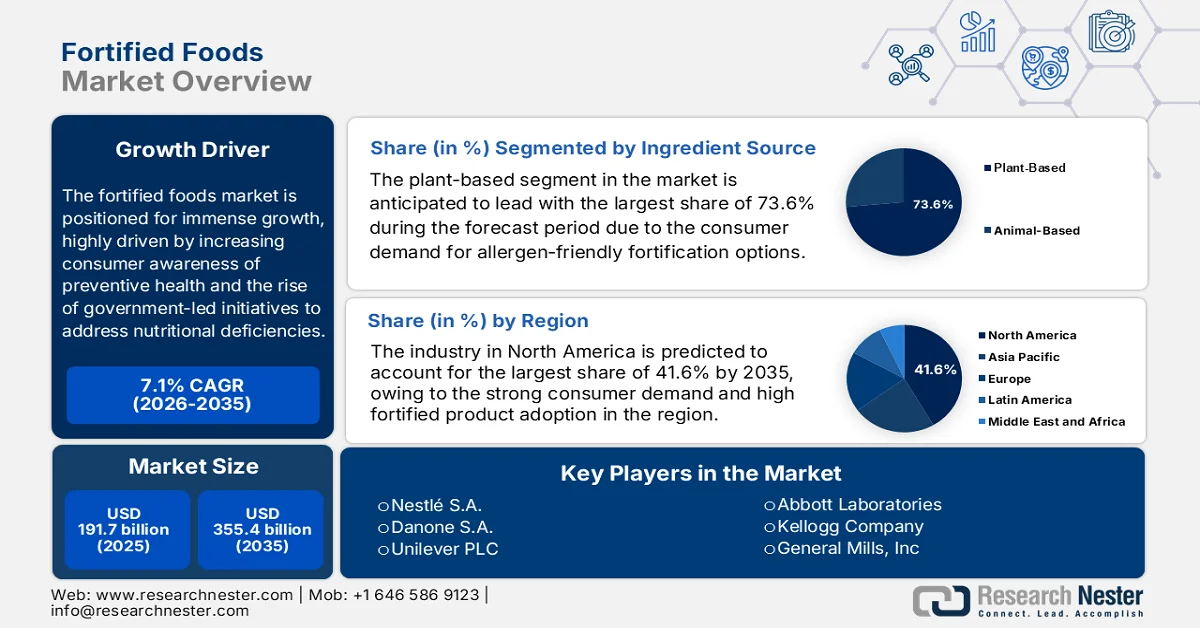
The global fortified foods market is witnessing immense growth, effectively propelled by increasing consumer awareness of preventive health and the rise of government-led initiatives that are aimed at tackling micronutrient deficiencies. In August 2023, the Royal Society of Chemistry revealed that in India, malnutrition is a major public health issue, wherein 56% of women and adolescent girls are affected by iron deficiency anemia, and 36% of women are underweight. In this context, the government has mandated fortification of staples such as all-purpose flour, wheat flour, rice, salt, milk, oil, and vanaspati under FSSAI regulations to address these deficiencies. Industrial, biofortification, and food-to-food fortification approaches are being implemented at scale, supported by public distribution and school feeding programs, thus denoting a huge opportunity for the fortified foods market to grow in the upcoming years.
Global Malnutrition Statistics 2022: Overweight, Obesity, Undernutrition, and Childhood Nutrition Risks
|
Category |
Age Group |
Value |
|
Adults overweight |
≥18 years |
2.5 billion |
|
Adults obese |
≥18 years |
890 million |
|
Adults underweight |
≥18 years |
390 million |
|
Children under 5 stunted |
<5 years |
149 million |
|
Children under 5 are overweight/obese |
<5 years |
37 million |
|
Children & adolescents 5-19 overweight |
5-19 years |
390 million |
|
Children & adolescents 5-19 obese |
5-19 years |
160 million |
|
Children & adolescents 5-19 thin |
5-19 years |
190 million |
Source: WHO
Furthermore, the foundational factors reshaping the growth dynamics of the fortified foods market are the rapid rise of plant-based fortifiers, such as pulse proteins and algae-based nutrients, and the increasing use of advanced technologies, i.e., microencapsulation, to improve nutrient stability. As per the article published by the World Health Organization (WHO) in May 2023, the 76th World Health Assembly adopted a resolution encouraging the Member States to accelerate food fortification and supplementation efforts, with the main goal to prevent micronutrient deficiencies, which are affecting around 50% of preschool children and 67% of women of reproductive age globally. It also noted that large-scale fortification of staples such as wheat, maize, rice, cooking oil, and salt is recommended to correct and prevent deficiencies in folate, iron, vitamin A, zinc, and iodine. In addition, the WHO emphasizes fortification as a cost-effective, evidence-based intervention to reduce anemia, neural tube defects, and other deficiency-related health risks.
Key Fortified Foods Market Insights Summary:
Regional Highlights:
- North America fortified foods market is projected to account for a 41.6% share by 2035, attributed to strong consumer demand, high adoption of fortified products, and advanced regulatory frameworks
- Asia Pacific is expected to witness the fastest growth during 2026–2035, fueled by rapid urbanization, rising disposable incomes, and strong government initiatives to address micronutrient deficiencies
Segment Insights:
- Plant-based ingredients segment in the fortified foods market is anticipated to hold a 73.6% share by 2035, propelled by increasing demand for allergen-friendly options and advancements in plant-derived nutrient extraction technologies
- Fortified dairy segment is forecasted to secure a notable revenue share by 2035, driven by strong consumer familiarity and supportive regulatory frameworks enabling nutrient enrichment
Key Growth Trends:
- Micronutrient deficiency challenges
- Changing dietary habits & lifestyle trends
Major Challenges:
- Consumer skepticism
- High production costs
Key Players: Nestlé S.A. (Switzerland), Danone S.A. (France), Unilever PLC (UK), Abbott Laboratories (U.S.), Kellogg Company (U.S.), General Mills, Inc. (U.S.), PepsiCo, Inc. (U.S.), The Kraft Heinz Company (U.S.), Archer Daniels Midland Company (U.S.), Cargill, Incorporated (U.S.), DSM-Firmenich AG (Netherlands), BASF SE (Germany), Arla Foods amba (Denmark), FrieslandCampina N.V. (Netherlands), Fonterra Co-operative Group (New Zealand), Yakult Honsha Co., Ltd. (Japan), Meiji Holdings Co., Ltd. (Japan), Arcor (Argentina), Mastellone Hermanos (Argentina), Huel (UK), CJ CheilJedang Corporation (South Korea), Tata Consumer Products Limited (India), Gujarat Cooperative Milk Marketing Federation (Amul) (India).
Global Fortified Foods Market Forecast and Regional Outlook:
Market Size & Growth Projections:
- 2025 Market Size: USD 191.7 billion
- 2026 Market Size: USD 205.3 billion
- Projected Market Size: USD 355.4 billion by 2035
- Growth Forecasts: 7.1% CAGR (2026-2035)
Key Regional Dynamics:
- Largest Region: North America (41.6% Share by 2035)
- Fastest Growing Region: Asia Pacific
- Dominating Countries: United States, China, Germany, Japan, United Kingdom
- Emerging Countries: India, Brazil, Indonesia, Mexico, Vietnam
Last updated on : 7 April, 2026
Fortified Foods Market - Growth Drivers and Challenges
Growth Drivers
- Micronutrient deficiency challenges: The widespread micronutrient deficiencies, such as iron, iodine, vitamin A, D, Zinc is affecting a substantial population globally. In this context, fortified foods help to bridge this nutritional gap, making them essential in many diets and public health programs. As per the article published by the National Institute of Health (NIH) in June 2025, 81.4 million women were affected with iodine deficiency globally in a year, with an age-standardized prevalence of 2,871.7 per 100,000. The condition caused 1.1 million years lived with disability, with an age-standardized rate of 38.4 per 100,000. Regions with the highest burden included Central Sub-Saharan Africa being 17,701 per 100,000, South Asia, i.e., 6,611.4 per 100,000, and Eastern Sub-Saharan Africa, with 5,219.7 per 100,000, underscoring the urgent need for targeted interventions, thus benefiting the fortified foods market.
- Changing dietary habits & lifestyle trends: Busy lifestyles and the rising preference for convenience foods such as fortified snacks, fortified ready‑to‑eat meals, and functional beverages contribute to fortified foods market growth. Consumers are looking for products that combine convenience with health benefits, thus propelling the continued growth of the fortified foods market. According to the article published by the WHO in January 2026, unhealthy diets are identified as the leading risk factor for disease as well as disability, wherein these can lead to malnutrition and noncommunicable diseases. Besides, it also mentioned that globally, more than 50% of children under five and over two-thirds of non-pregnant women of reproductive age are deficient in at least one essential micronutrient, underscoring the role of fortified foods in public health. In this context, the WHO emphasizes that nutrient-dense diets combined with fortified staples such as flour, rice, oil, salt, or sugar can improve micronutrient intake and reduce diet-related health risks.
- Rising cereal production: Emerging economies are experiencing rapid cereal production growth, which efficiently catalyzes the production of fortified and premium nutrition products. As per the July 2025 article published by the Organization for Economic Co-operation and Development, the cereal consumption is projected to surpass a total of 3.2 billion tons by 2034 globally, which is driven mainly by rising populations in Asia and Africa. Besides, it also mentioned that food use will account for 40% of cereals, feed for 33%, and the rest for biofuels and other uses, wherein wheat and rice are primarily consumed as food, while maize dominates feed demand. At the same time, production is expected to rise by 1.1% on a yearly basis due to yield improvements from better seeds and farming practices, denoting a huge opportunity for the fortified foods market to grow.
Challenges
- Consumer skepticism: Most of the consumers are skeptical regarding the efficacy of fortified foods, especially in terms of synthetic vitamins or additives. The misconceptions about artificial fortification can affect adoption rates, especially among health-conscious buyers who prefer natural products. At the same time, the lack of proper understanding of nutritional benefits in turn leads to undervaluation of fortified food products. Therefore, marketing claims need to be scientifically proven as regulatory bodies scrutinize the health benefits. In this context, educating consumers about the nutritional value, health benefits, and safety of fortified foods is highly essential. Meanwhile, without targeted communication and credible evidence, consumer skepticism can cause hindrance to the fortified foods market growth.
- High production costs: These fortified foods require specialized ingredients, fortification technologies, and quality assurance methods, which in turn increase production expenses. The nutrient-enriched formulations can be more expensive when compared to conventional foods due to sourcing vitamins, minerals, probiotics, or protein isolates. Simultaneously, equipment for precise dosing, microencapsulation, and stability testing adds to capital expenditure. Smaller-scale manufacturers in the fortified foods market find it challenging to achieve economies of scale, which in turn limits profitability. High costs can make fortified products less competitive when compared to standard alternatives, especially in price-sensitive markets. In addition, any type of fluctuations in terms of raw material prices, such as protein or micronutrients, can impact margins.
Fortified Foods Market Size and Forecast:
| Report Attribute | Details |
|---|---|
|
Base Year |
2025 |
|
Forecast Year |
2026-2035 |
|
CAGR |
7.1% |
|
Base Year Market Size (2025) |
USD 191.7 billion |
|
Forecast Year Market Size (2035) |
USD 355.4 billion |
|
Regional Scope |
|
Fortified Foods Market Segmentation:
Ingredient Source Segment Analysis
The plant-based ingredients in the fortified foods market are anticipated to lead with the largest share of 73.6% during the forecast period. The dominance of the segment is largely driven by consumer demand for allergen-friendly fortification options and improvements in plant-derived nutrient extraction technologies. In January 2023, Nutricia announced the launch of Fortimel plant-based energy, which is its first plant-based medical nutrition drink, especially designed for patients at risk of malnutrition who follow vegan, vegetarian, or flexitarian-type diets. It also mentioned that clinical studies in the UK showed it remarkably improved protein and energy intake with 94% adherence, which supports better patient outcomes. Therefore, from a strategic perspective, such instances underscore the prominence of plant-based fortification, creating opportunities for innovation, market differentiation, and expanded adoption of nutritionally enhanced products.
Product Type Segment Analysis
In the product type segment, fortified dairy is predicted to garner a significant revenue share of the fortified foods market by the conclusion of 2035. The subtype is mainly driven by strong consumer familiarity and supportive regulatory frameworks that allow for vitamin D and calcium enrichment in milk-based offerings. In April 2025, Nestlé introduced Bear brand milk n’ soy in the Philippines, which is a nutritious and affordable powdered drink combining milk with high-quality soy protein for school-age children. It is especially designed to address undernutrition, and it provides essential proteins, vitamins, and minerals during a critical growth phase. It is already successful under the Nido brand in Nigeria, and the product will expand across Asia, Africa, and Latin America to make good nutrition more accessible. Therefore, such instances illustrate that established dairy brands are leveraging fortified products to combine traditional nutritional benefits with innovative protein sources.
End use Segment Analysis
Adult, in terms of the end use segment, is expected to attain a considerable revenue share in the fortified foods market over the forecasted years. The segment’s growth is largely attributable to factors such as aging populations, increased awareness of chronic disease prevention, and lifestyle-related nutrient deficiencies in developed regions. In October 2024, the Press Information Bureau (PIB) stated that the Union Cabinet approved the continuation of free fortified rice supply under PMGKAY and other welfare schemes from July 2024 to December 2028, and it is fully funded by the government of India. This initiative is aligned with the country’s vision of nutritional security and primarily aims to address anemia and micronutrient deficiencies through rice enriched with iron, folic acid, and vitamin B12. Meanwhile, rice being a staple for 65% of India’s population, fortification ensures widespread nutritional benefits, thus benefiting the overall segment’s growth.
Our in-depth analysis of the fortified foods market includes the following segments:
|
Segment |
Subsegments |
|
Ingredient Source |
|
|
Product Type |
|
|
End use |
|
|
Nutrition Type |
|
|
Application |
|
|
Distribution Channel |
|

Vishnu Nair
Head - Global Business DevelopmentCustomize this report to your requirements — connect with our consultant for personalized insights and options.
Fortified Foods Market - Regional Analysis
North America Market Insights
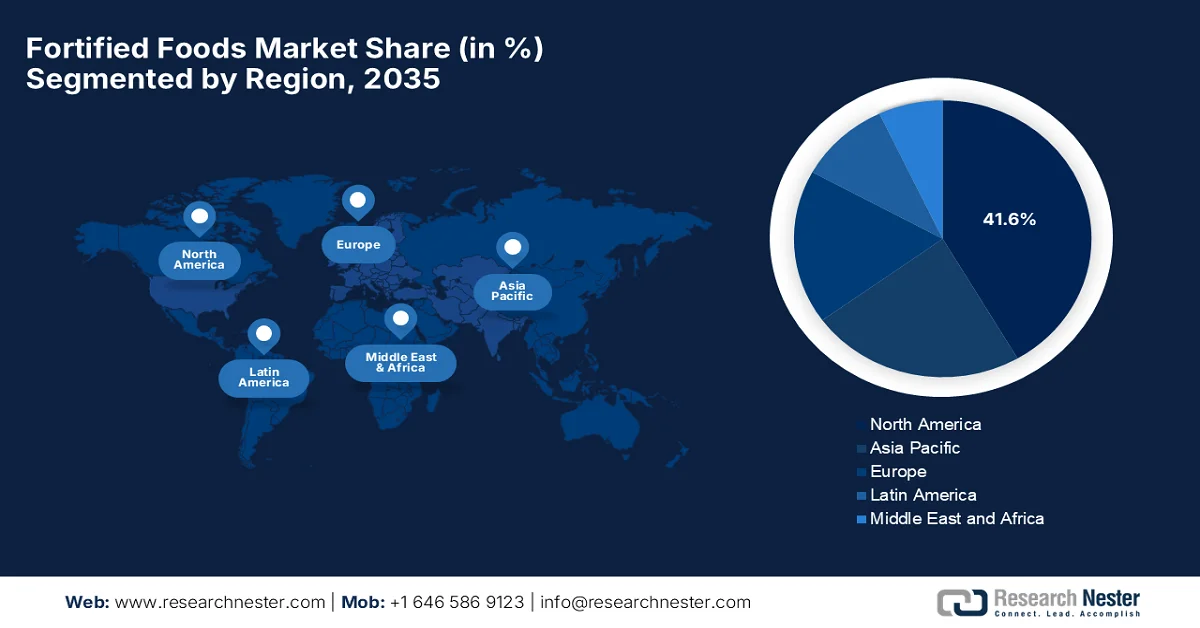
North America fortified foods market is anticipated to capture the largest share of 41.6% during the forecast period. The region’s market is largely driven by strong consumer demand, high fortified product adoption, and advanced regulatory frameworks. The region’s advanced food processing capabilities enable innovation in fortification technologies and continue to fuel growth in targeted nutrition offerings. As per an article published by JN Nutrition in October 2025, the study analyzed fortified food purchases in the U.S. by focusing on beverages and grain products. This particular study identified products fortified with vitamin A, vitamin C, calcium, or iron, revealing that fortification practices vary widely across categories, with ready-to-eat cereals and breads being the most commonly fortified aspects. It found that fortified foods can contribute to nutrient intake, and this framework provides a proper approach to understanding market-driven fortification and its role in dietary adequacy and public health planning.
The convenience of functional nutrition is the main factor that is responsibly uplifting the fortified foods market in the U.S. At the same time, large-scale mandatory enrichment programs for staple grains are providing a solid foundation, wherein the rise of plant-based alternatives has created a surge in demand for products fortified with calcium, Vitamin D, and B12. As stated by the U.S. Department of Agriculture (USDA) in January 2026, U.S. health and agriculture leaders introduced the Dietary Guidelines 2025-2030, which marks a major reset of federal nutrition policy. The new guidelines emphasize eating nutritious food, i.e., whole, nutrient-dense options such as protein, dairy, vegetables, fruits, healthy fats, and whole grains. Besides, this particular shift responds to alarming rates of obesity, prediabetes, and diet-driven chronic disease that strain healthcare and national readiness, thus making it suitable for bolstering the country’s fortified foods market growth.
A stringent regulatory environment where regulatory bodies impose mandates on the enrichment of staples to address public health needs is the main factor behind the robust growth of the fortified foods market in Canada. Consumers in the country are looking for functional benefits such as gut health and immune support, leading to a rise in products enriched with probiotics, prebiotics, and plant-based proteins. As per the government data published in September 2025, the country regulates food fortification under the Food and Drug Regulations, which specify the foods and nutrients that may or must be fortified, with nutrient levels associated with reasonable daily intake. To address gaps, Health Canada can issue temporary marketing authorizations, which in turn allow fortification outside existing rules while requiring supporting research. The main focus is on vitamin D, wherein new regulations double levels in cow’s milk, goat’s milk, and margarine, and permit fortification in plant-based beverages, yogurt, and kefir.
APAC Market Insights
The Asia Pacific fortified foods market is projected to grow at the fastest rate from 2026 to 2035. The region’s development is mainly fueled by rapid urbanization, rising disposable incomes, and strong government efforts to combat micronutrient deficiencies. Policy support is playing a pivotal role in fortified foods market acceleration, exemplified by regulatory approvals in countries such as China, Japan, India, and Australia. An NIH article published in September 2024 revealed the role of fortified foods and dietary supplements in nutrient intake among adults based in Japan by using 4-day dietary records from 392 participants. About 31% of individuals consumed fortified foods or supplements, with these contributing modestly, <4% from foods and <21% from supplements, to overall nutrient intake. It stated that users were more likely to meet average requirements for several micronutrients, wherein deficiency prevalence decreased by at least 10% for certain nutrients. The findings denote that fortified foods and supplements can effectively improve nutrient adequacy without increasing the risk of excessive intake.
The government's shift from voluntary to mandatory mass fortification for staple items is readily driving the growth of the fortified foods market in China. This sector is considered to be a crucial component of the country's rapidly expanding functional food and beverage landscape, where a large aging population and an increasingly health-conscious middle class are prioritizing preventative healthcare. In October 2023, DSM-Firmenich announced that it obtained regulatory clearance in China for two human milk oligosaccharide (HMO) ingredients, i.e., GlyCare 2’-fucosyllactose (2’-FL) and GlyCare lacto-N-neotetraose (LNnT). These HMOs are the key components of breast milk that support infant gut health, immunity, and development, and are now approved for use in infant formulas along with related products. The approval followed a rigorous multi-phase safety and technical assessment by authorities from the country. Such a supportive regulatory ecosystem will encourage more pioneers to establish their footprint in the country.
The fortified foods market in India is entering into a rapid pace of progression, which is facilitated by the government-led push and school meal programs, aiming to combat widespread micronutrient deficiencies such as anemia and malnutrition. On the other hand, a burgeoning middle class is fueling a voluntary market for premium fortified products such as health drinks, breakfast cereals, and snacks enriched with iron, iodine, and vitamins A and D. In August 2025 PIB stated that the country’s government successfully extended the fortified rice scheme under PMGKAY and other welfare programs until December 2028, with total funding of USD 2.05 billion. This initiative ensures fortified rice enriched with iron, folic acid, and vitamin B12 is supplied nationwide, with the main goal to address anemia and micronutrient deficiencies. In addition, NDDB’s Gift Milk program has reached over 41,700 children in 11 states, providing fortified milk to strengthen nutrition support across schools, thus denoting a positive fortified foods market outlook.
India’s Fortified Rice & Nutrition Schemes (2024-2028) - Budgets, Impact & USD Conversions
|
Initiative |
Approximate Amount |
Key Impact |
|
Fortified Rice Scheme (2024-2028) |
USD 141.5 billion |
Universal supply of fortified rice under PMGKAY & welfare schemes |
|
Annual Outlay for Rice Fortification |
USD 307 million |
Potential to avert 16.6 million DALYs per year |
|
Healthcare Savings (GDP terms) |
USD 5.96 billion |
Reduced the burden of anemia & micronutrient deficiencies |
|
Centrally Sponsored Pilot Scheme (2019-2022) |
USD 21 million |
Distributed 4.3 lakh MT of fortified rice in 11 states |
|
CCEA Approved Rollout (2022-2024) |
USD 511 million |
Phased national rollout of fortified rice |
|
PM POSHAN Scheme (2021-2026) |
USD 15.7 billion |
Nutrient-rich meals for school children nationwide |
Source: PIB
Europe Market Insights
Europe fortified foods market has gained enhanced exposure due to the presence of a larger consumer base that prioritizes suitable wellness and the prevention of lifestyle-related diseases through diet. Sustainability also plays an important role, wherein manufacturers in the region are highly focused on clean-label formulations and eco-friendly packaging, with the main goal to align with regional environmental values. As per the January 2026 article published by NIH, in Europe, childhood malnutrition represents a double burden, with both undernutrition and overnutrition affecting young populations. It states that 25% of children aged 7 to 9 years live with overweight, including obesity, and 10% are classified as obese, whereas underweight prevalence in Eastern Europe is identified at 8% to 9%. Vulnerable groups, such as children from low socioeconomic backgrounds and migrant families, are disproportionately affected, reflecting the huge necessity for fortified foods.
The heightened demand for nutrient-dense meal solutions is driving the fortified foods market in Germany. Major trending categories in the country include fortified dairy, such as vitamin-enriched yoghurts and milk, along with bakery products such as cereals and energy bars, which are suitable for younger demographics and aging populations looking for age-specific benefits such as hormonal or bone health support. Manufacturers in the country are opting for clean label formulations in order to satisfy consumer priority for natural ingredients when compared to artificial additives, while also exploring personalized nutrition through digital platforms and AI-driven dietary advice. Key product innovations frequently include the addition of essential micronutrients such as vitamins B12, C, and D, as well as minerals such as iodine and iron, to address common nutritional gaps in the country’s dietary pattern. Furthermore, specialized health stores and online platforms are gaining traction as consumers look for more targeted functional benefits.
The UK fortified foods market is reshaped by the aspect of mandatory enrichment and public health initiatives. The market is currently seeing significant diversification through plant-based dairy alternatives and breakfast cereals, which are being fortified to support vegan and vegetarian diets. Consumers in the country are showcasing an increased preference for functional beverages and snacks that benefit gut health and energy. In May 2024, the country’s government reported that fortifying foods such as breakfast cereals and fat spreads with vitamin D can efficiently help improve musculoskeletal health, especially during months of low sunlight exposure. In addition, the government noted that randomized trials have shown fortified foods effectively increase blood 25(OH)D levels. Meanwhile, the mean dietary intakes of vitamin D in the country are below the recommended 10 µg per day across all age groups, with low supplement uptake among adults denoting a huge necessity for fortified foods.
Key Fortified Foods Market Players:
- Nestlé S.A. (Switzerland)
- Danone S.A. (France)
- Unilever PLC (UK)
- Abbott Laboratories (U.S.)
- Kellogg Company (U.S.)
- General Mills, Inc. (U.S.)
- PepsiCo, Inc. (U.S.)
- The Kraft Heinz Company (U.S.)
- Archer Daniels Midland Company (U.S.)
- Cargill, Incorporated (U.S.)
- DSM-Firmenich AG (Netherlands)
- BASF SE (Germany)
- Arla Foods amba (Denmark)
- FrieslandCampina N.V. (Netherlands)
- Fonterra Co-operative Group (New Zealand)
- Yakult Honsha Co., Ltd. (Japan)
- Meiji Holdings Co., Ltd. (Japan)
- Arcor (Argentina)
- Mastellone Hermanos (Argentina)
- Huel (UK)
- CJ CheilJedang Corporation (South Korea)
- Tata Consumer Products Limited (India)
- Gujarat Cooperative Milk Marketing Federation (Amul) (India)
- Company Overview
- Business Strategy
- Key Product Offerings
- Financial Performance
- Key Performance Indicators
- Risk Analysis
- Recent Development
- Regional Presence
- SWOT Analysis
- Nestlé S.A. is one of the leading players in this field, which benefits from strong R&D capabilities and proprietary technologies, with a main goal of developing enhanced, nutritionally fortified products. Besides, the firm is highly focused on science-based innovation, including microbiome-supporting ingredients and low-lactose fortified products.
- Danone S.A. is yet another dominant player that concentrates on health-focused categories such as dairy, plant-based products, and specialized nutrition. The company’s renew strategy has an increased priority towards innovation in fortified and functional foods, such as iron-enhanced formulations and probiotic-rich products.
- Abbott Laboratories benefits from a commendable presence in clinical and specialized nutrition, which includes brands such as Ensure and infant formula. The company’s strategy revolves around science-backed nutritional solutions by targeting specific health needs, such as aging, immunity, and recovery.
- General Mills, Inc. is a major player in fortified cereals, dairy, and snacks, with a strong emphasis on protein fortification and micronutrient enrichment. In addition, the company’s strategy includes reformulating core products to enhance nutritional value, thereby expanding into functional food categories.
- DSM-Firmenich AG operates in the value chain as a leading supplier of vitamins, minerals, and fortification ingredients, making it highly essential to the entire fortified foods ecosystem. The firm is highly focused on advanced nutrient delivery technologies, i.e., microencapsulation and bioavailability enhancement.
Below is the list of some prominent players operating in the global fortified foods market:
The fortified foods market is being led by global giants such as Nestlé S.A., Danone S.A., and Unilever PLC, along with ingredient specialist players such as DSM-Firmenich AG and BASF SE, that have also maintained stronger positions. At the same time, leading pioneers in this sector are highly focused on fundamental aspects such as product innovation, strategic partnerships, and acquisitions with a prime aim to expand portfolios in functional and personalized nutrition. Some of the strategic priorities include fortified dairy and plant-based hybrids, micronutrient-enhanced staples, and medical nutrition products. For example, in March 2026, Danone announced the acquisition of Huel with the main goal of expanding its presence in the functional and complete nutrition space. Huel’s portfolio of ready-to-drink meals, powders, bars, and functional beverages is an add-on for Danone’s global reach and knowledge, which will drive accelerated growth, innovation, and international expansion.
Corporate Landscape of the Fortified Foods Market:
Recent Developments
- In March 2026, Danone and Arcor announced a strengthened strategic alliance in Argentina through a new joint venture combining Danone’s local dairy business with Arcor’s Mastellone Hermanos and shared logistics operations. The partnership aims to create an integrated dairy platform leveraging production capacity, innovation, and distribution to expand fortified foods market reach.
- In November 2023, Nestlé announced the launch of N3 milk, which is a new range developed using proprietary technology to reduce lactose, thereby adding prebiotic fibers that support gut health. The milk retains essential nutrients such as proteins, vitamins, and minerals, while offering lower lactose and fewer calories.
- Report ID: 53
- Published Date: Apr 07, 2026
- Report Format: PDF, PPT
- Explore a preview of key market trends and insights
- Review sample data tables and segment breakdowns
- Experience the quality of our visual data representations
- Evaluate our report structure and research methodology
- Get a glimpse of competitive landscape analysis
- Understand how regional forecasts are presented
- Assess the depth of company profiling and benchmarking
- Preview how actionable insights can support your strategy
Explore real data and analysis
Frequently Asked Questions (FAQ)
About this Report
Connect with our Expert


Report, 2026-2035



Copyright @ 2026 Research Nester. All Rights Reserved.
