Forensic Genomics Market Outlook:
Forensic Genomics Market size was valued at USD 655.7 million in 2025 and is projected to exceed USD 2.72 billion by the end of 2035, expanding at over 15.3% CAGR during the forecast period, i.e., 2026-2035. In 2026, the industry size of forensic genomics is estimated at USD 756.1 million.
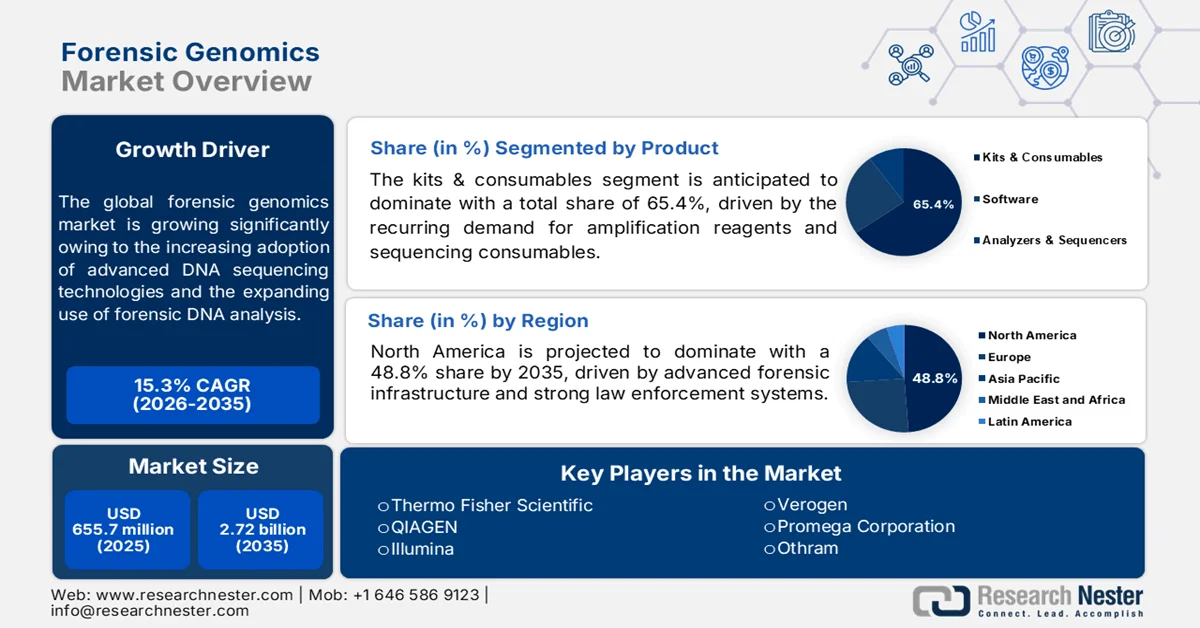
The forensic genomics market is witnessing sustained growth largely attributable to the increasing adoption of advanced DNA sequencing technologies, expanding use of forensic DNA analysis in criminal investigations, disaster victim identification, missing person cases, and kinship testing. Apart from this, continuous advancements in sequencing, bioinformatics, and forensic DNA phenotyping are transforming forensic workflows by improving analytical precision and expanding the scope of genetic evidence. In September 2025, an article published by the National Institutes of Health (NIH) stated that genomics is transforming forensic science by using dense SNP analysis and forensic genetic genealogy to identify unknown individuals, solve long-unsolved crimes, and analyze degraded DNA more effectively than traditional STR profiling. It also stated that improvements in sequencing, bioinformatics, and automation have expanded investigative capabilities, thus elevating the growth potential of the market.
Furthermore, partnerships between law enforcement bodies, forensic laboratories, and academic researchers are driving technological advancements, thereby enabling the creation of more accurate and efficient genomic analysis solutions. Growing investments in forensic research and digital forensic integration are positively influencing forensic genomics market growth. In this context, RTI International and Othram, in July 2026, were awarded funding from the National Institute of Justice to undertake one of the first large-scale investigations into the effectiveness of forensic genetic genealogy across a range of ancestral populations that are relevant to U.S. forensic investigations. The research will generate evidence-based recommendations for case selection, investigative practices, and policy, thereby also comparing traditional ancestry assessments with genomic ancestry inference to improve fairness and effectiveness.
Key Forensic Genomics Market Insights Summary:
Regional Insights:
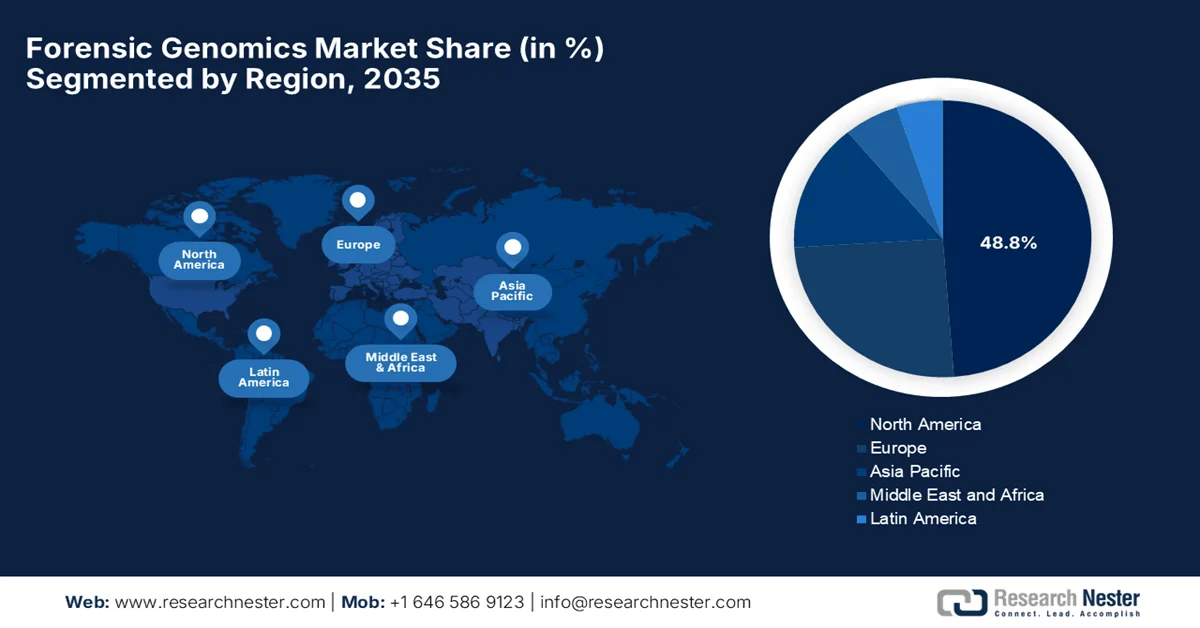
- North America is anticipated to account for 48.8% share by 2035 in the forensic genomics market, strengthened by advanced law enforcement infrastructure and adoption of next-generation sequencing.
- Asia Pacific is poised to register the fastest growth throughout 2026-2035, propelled by government efforts to improve national security infrastructure and establish extensive DNA databases.
Segment Insights:
- The forensic genomics market kits and consumables segment is projected to account for 65.4% share by 2035, supported by the continuous demand for DNA extraction kits, amplification reagents, sequencing supplies, and sample preparation products utilized in forensic laboratories.
- By 2035, the criminal testing application segment is expected to secure a considerable revenue share, buoyed by the increasing use of DNA profiling for suspect identification, crime scene investigation, and resolution of cold cases.
Key Growth Trends:
- Advancements in next-generation sequencing
- Expansion of government funding and national DNA databases
Major Challenges:
- Ethical, privacy, and regulatory concerns
- Sample degradation and incompatibility issues
Key Players: Thermo Fisher Scientific,QIAGEN,Illumina,Verogen,Promega Corporation,Othram,Signature Science.
Global Forensic Genomics Market Forecast and Regional Outlook:
Market Size & Growth Projections:
- 2025 Market Size: USD 655.7 million
- 2026 Market Size: USD 756.1 million
- Projected Market Size: USD 2.72 billion by 2035
- Growth Forecasts: 15.3% CAGR (2026-2035)
Key Regional Dynamics:
- Largest Region: North America (48.8% Share by 2035)
- Fastest Growing Region: Asia Pacific
- Dominating Countries: United States, China, United Kingdom, Germany, Japan
- Emerging Countries: India, Singapore, South Korea, Australia, Brazil
Last updated on : 6 August, 2026
Forensic Genomics Market - Growth Drivers and Challenges
Growth Drivers
- Advancements in next-generation sequencing: These modern NGS platforms allow forensic labs to extract dense, high-resolution genomic data from highly degraded, complex, or low-yield biological samples. This increased analytical precision is driving a market-wide shift from basic hardware toward end-to-end evidence workflows. In September 2023, QIAGEN and Bode Technology formed a multi-year partnership to expand the global use of the GEDmatch PRO forensic genetic genealogy database for law enforcement and human remains identification. Under this agreement, Bode will manage commercial services for GEDmatch PRO, whereas QIAGEN will continue enhancing the platform's software, security, and forensic capabilities, thus positively influencing the forensic genomics market’s growth.
- Expansion of government funding and national DNA databases: Governments across the globe are funneling extensive capital into national forensic infrastructure and capacity building, fueling growth of the forensic genomics market. Federal grants aim to upgrade state crime laboratories, clear testing backlogs, and actively expand national DNA databases such as CODIS in the U.S. In March 2024, the Bureau of Justice Assistance launched the FY 2024 formula DNA capacity enhancement for backlog reduction program with a main goal to support crime laboratories in expanding DNA analysis capabilities. Besides, this particular initiative provides formula-based funding to eligible government agencies and public institutions in order to process forensic DNA samples for inclusion in the FBI’s CODIS database and reduce testing backlogs.
Federal Funding for Forensic Genomics Research and DNA Technology Advancements 2023-2024
|
Fiscal Year |
Project Title |
Recipient |
Award Amount (USD) |
|
2024 |
A Comparative Evaluation of the MinION and MiSeq Sequencing Platforms for the Analysis of Human Hand Microbial Profiles for Forensic Investigations |
Florida International University |
487,790 |
|
2024 |
Age Estimation from Epigenetic Features of Hair DNA |
University of California, Santa Cruz |
640,358 |
|
2024 |
Best Practices for Forensic Laboratories Adopting Probabilistic Genotyping Systems |
Noblis, Inc. |
500,000 |
|
2024 |
DNA Mixture Interpretation of SNP Sequencing Data for Investigative Genetic Genealogy |
The Regents of the University of Colorado |
120,000 |
|
2024 |
Guiding Interpretation: Leveraging High-Density SNP Data from Major U.S. Populations for Forensic Genetic Analyses |
Armed Forces DNA Identification Laboratory |
990,468 |
|
2024 |
Droplet Digital PCR: Assessing the Increased Performance for DNA Quantification in Forensic Science |
North Carolina State University |
422,235 |
|
2023 |
Capturing Nuclear DNA from Hair Shafts |
George Washington University |
413,504 |
|
2023 |
Democratizing Investigative Genetic Genealogy |
University of North Texas Health Science Center at Fort Worth |
759,008 |
|
2023 |
Development of Computational Methods for Genetic Identification and Kinship Analysis of Forensic Samples |
University of California, Santa Cruz |
111,000 |
|
2023 |
Developmental Validation of a Novel Multi-analyte Recovery Method for Trace Biological Samples |
West Virginia University Research Corporation |
494,268 |
|
2023 |
Evaluation of Target Enrichment for SNP Genotyping of Skeletal Remains |
Bode Cellmark Forensics, Inc. |
659,287 |
|
2023 |
Optimizing New STRs for Enhanced DNA Mixture Deconvolution |
University of North Texas Health Science Center at Fort Worth |
513,529 |
Source: NIJ
Challenges
- Ethical, privacy, and regulatory concerns: The genomic information contains sensitive personal data; therefore, concerns related to data security, unauthorized use, and privacy breaches can hinder the adoption rates in the forensic genomics market. On the other hand, the expansion of DNA databases has intensified debates in terms of individual privacy rights, informed consent, and the long-term storage of genetic information. Different countries have varying legal standards governing DNA collection, sharing, and retention, which creates obstacles for cross-border investigations and international collaborations. Compliance with stringent data protection regulations needs continuous monitoring and investment in secure data management systems, thus making it challenging for players in this field.
- Sample degradation and incompatibility issues: Environmental sample degradation creates technical volatility in forensic workflows. Biological evidence, which is recovered from crime scenes, is frequently exposed to harsh outdoor conditions, leading to fragmented or contaminated DNA. Meanwhile, next-generation sequencing excels at processing low-template material, but resolving multi-contributor DNA mixtures is highly difficult. In addition, the adoption of advanced sequencing technologies can be constrained by integration challenges with existing forensic systems and aging laboratory infrastructure. Newer platforms that sequence single-nucleotide polymorphisms do not align with these historical registries, ultimately impacting the market’s growth potential.
Forensic Genomics Market Size and Forecast:
| Report Attribute | Details |
|---|---|
|
Base Year |
2025 |
|
Forecast Year |
2026-2035 |
|
CAGR |
15.3% |
|
Base Year Market Size (2025) |
USD 655.7 million |
|
Forecast Year Market Size (2035) |
USD 2.72 billion |
|
Regional Scope |
|
Forensic Genomics Market Segmentation:
Product Segment Analysis
The kits and consumables segment is projected to hold the highest share of the forensic genomics market, accounting for around 65.4% of the total share during the forecast period. This dominance is due to the continuous demand for DNA extraction kits, amplification reagents, sequencing supplies, and sample preparation products utilized in forensic laboratories. Also, the growing number of forensic cases, expansion of national DNA databases, and increasing adoption of advanced genomic technologies are contributing to the sub-segment’s leadership. In this context, the National Crime Scene Consumables contract allocated by the UK Police and Crime Commissioners in December 2024 efficiently supports the supply of forensic equipment and materials for around seven police forces across England. This five-year agreement was valued at USD 8.3 million, and it covers items, i.e., DNA sampling kits, protective equipment, evidence packaging, and forensic consumables.
Application Segment Analysis
By the conclusion of the forecast period, criminal testing application is expected to capture a considerable revenue share in the market. The sub-segment’s growth in this field is majorly attributable to the increasing use of DNA profiling for suspect identification, crime scene investigation, and resolution of cold cases. In addition, increased government initiatives to strengthen criminal justice systems and improve forensic testing infrastructure are also accelerating demand for criminal DNA testing solutions globally. In this context, Australia’s Criminal Intelligence Commission (ACIC) reported that the National Criminal Investigation DNA Database contained 1,885,882 DNA profiles as of October 2024, which were collected from crime scenes, offenders, suspects, volunteers, and unidentified remains. This database supports law enforcement by linking DNA evidence across cases and assisting investigations into unresolved crimes, thus denoting a wider segment scope.
Method Segment Analysis
Capillary electrophoresis, which is a part of the method segment, is anticipated to grow with lucrative opportunities in the market from 2026 to 2035. The segment’s growth is largely attributable to its established role as a reliable, cost-effective, and standardized method for short tandem repeat profiling in forensic laboratories. The technology continues to gain traction due to its high accuracy in generating DNA profiles, compatibility with existing forensic databases, and heightened adoption in both of the public and private laboratories. In addition, improvements in automated electrophoresis platforms, enhanced multiplex STR kits, and streamlined data interpretation workflows are improving laboratory efficiency and thus supporting continued demand for capillary electrophoresis-based forensic solutions.
Our in-depth analysis of the market includes the following segments:
|
Segment |
Subsegments |
|
Product |
|
|
Application |
|
|
Method |
|

Vishnu Nair
Head - Global Business DevelopmentCustomize this report to your requirements — connect with our consultant for personalized insights and options.
Forensic Genomics Market - Regional Analysis
North America Market Insights
North America forensic genomics market is forecasted to lead with a total share of 48.8% during the assessed timeframe. The region’s dominating position is largely fueled by advanced law enforcement infrastructure and adoption of next-generation sequencing. The region also benefits from substantial federal funding to clear crime laboratory backlogs and expand national DNA databases such as CODIS. As of October 2024, the DNA capacity enhancement for backlog reduction program provides financial support to forensic laboratories in order to increase DNA testing capacity and process more samples for entry into the FBI’s CODIS database. It also mentioned that through formula-based and competitive funding, the program helps eligible laboratories improve workflows, reduce DNA backlogs, and expand the use of forensic DNA technology.
Substantial federal grants, which are aimed at modernizing state crime laboratories, are driving the overall U.S. forensic genomics market. Investigative techniques are being supported by the pioneering use of forensic genetic genealogy to solve complex cold cases. In addition, a high concentration of leading industry vendors and private accredited laboratories fosters continuous innovation in automated DNA workflows and AI-based bioinformatics. In February 2026, the National Institute of Standards and Technology introduced a new forensic DNA reference material which is RM 8043, designed to help crime laboratories improve the analysis of complex evidence containing degraded DNA and multi-person DNA mixtures. This resource supports forensic scientists in validating testing methods, training analysts, and improving the accuracy of DNA interpretation in the most challenging cases, thus making it suitable for standard market growth.
In Canada, the market is gaining enhanced traction owing to the federal modernization initiatives and the integration of next-generation sequencing across public safety agencies. The market is supported by the academic-industry partnerships developing specialized workflows for missing persons investigations and wildlife forensics. In February 2025, the country’s government launched the Canadian Genomics Strategy with USD 175.1 million in federal funding over seven years to advance genomics research, commercialization, and innovation. The initiative aims to strengthen applications in healthcare, agriculture, clean technology, and environmental sustainability while improving data access and developing skilled talent.
APAC Market Insights
The Asia Pacific market is forecasted to progress at a quickest rate from 2026 to 2035. The region’s growth in this field is largely propelled by government efforts to improve national security infrastructure and establish extensive DNA databases. Growth in the regional market is also accelerated by rising crime rates, a growing volume of civil paternity disputes, and increasing adoption of next-generation sequencing. Based on the government data published in June 2023, Singapore’s Registration of Criminals (DNA Database, Identification Database and Register) Rules 2023 establish procedures for managing criminal DNA and identification records, including applications for removal of stored information. They also define approved uses of DNA database information, including forensic comparisons to support criminal investigations and national security-related inquiries, thus supporting the market’s expansion.
The consistent national efforts to automate sample-processing workflows are positioning Japan forensic genomics market for sustained growth. Market demand is being propelled largely by collaborative research projects with academic institutions to encourage specialized talent, along with an increasing application of AI-enabled data interpretation to reduce turnaround times. In May 2025, Illumina and the Okinawa Institute of Science and Technology partnered through a memorandum of understanding with a main goal to advance genomics research by combining advanced DNA sequencing technologies with interdisciplinary scientific expertise. This particular collaboration aims to promote innovation and talent development across areas including human health, environmental research, and marine conservation.
China forensic genomics market is being strengthened by the expansion of national forensic DNA infrastructure and the adoption of standardized DNA database frameworks. In addition, the country has continued to develop forensic DNA data management systems through standards established under the supervision of the government, including requirements for DNA database data structures and biological sample information management. In this context, China’s GB/T 41615-2022 standard established requirements for information items and data structures related to biological samples and individuals recorded in forensic DNA databases. It was implemented from January 2023, and this particular standard aims to improve the consistency, management, and exchange of forensic DNA data.
Europe Market Insights
The Europe market is projected to expand at a considerable rate during the stipulated timeline. The region’s growth in this field is effectively propelled by advanced cross-border judicial collaboration and extensive state funding to modernize law enforcement infrastructure. The market is accelerated by the rapid integration of forensic genetic genealogy to resolve cold cases and the expanding use of automated workflows to clear laboratory backlogs. In this context, NIH in June 2025 stated that a study of forensic DNA elimination databases in almost seven countries in Europe underscores their importance in identifying contamination risks and improving the reliability of DNA evidence. Besides, this research found differences in database structures, legal frameworks, and operational practices, reflecting the need for proper approaches across Europe. It also states that establishing harmonized DNA elimination database systems can completely enhance transparency and quality control in forensic investigations.
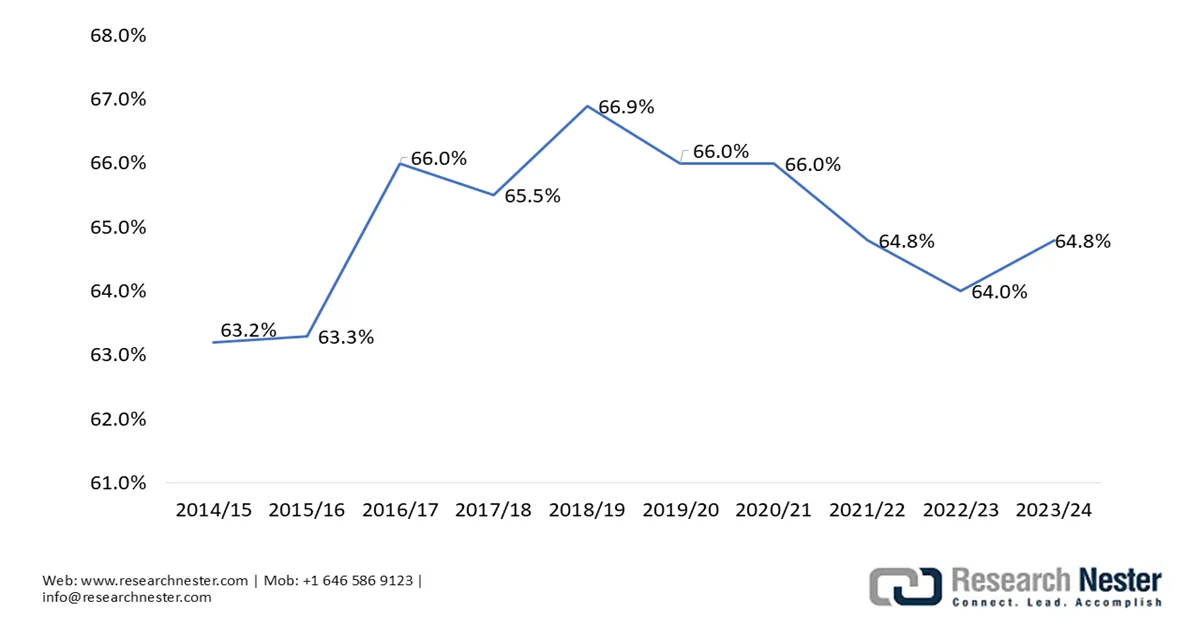
A highly advanced forensic science ecosystem and pioneering contributions to the National DNA Database are driving upliftment of the UK market. The market is propelled by the rising adoption of automated liquid-handling systems to optimize throughput across private forensic service providers and police forces. Based on government data which was published in October 2024, the DNA and fingerprint databases support UK criminal investigations and public safety. The national DNA database held more than 7.2 million subject DNA profiles and achieved a 64.8% match rate for newly loaded crime scene profiles, thus showcasing its effectiveness in linking evidence to individuals and cases, positively benefiting the market’s expansion.
UK National DNA Database (NDNAD) Crime Scene DNA Match Rate Trends: 2014/15 - 2023/24
Source: Government of the UK
UK NDNAD Crime Scene DNA Profile Records by Crime Type: 2023/24
|
Crime Type |
Number of Crime Scene DNA Profile Records Loaded |
Proportion of Total Crime Scene DNA Profiles (%) |
|
Burglary (including aggravated) |
10,833 |
44.7% |
|
Vehicle Crime |
4,117 |
17.0% |
|
Drugs |
1,748 |
7.2% |
|
Violent Crime |
1,231 |
5.1% |
|
Criminal Damage |
1,192 |
4.9% |
|
Robbery |
869 |
3.6% |
|
Rape |
585 |
2.4% |
|
Murder, manslaughter, and attempted murder |
534 |
2.2% |
|
Firearms |
527 |
2.2% |
|
Traffic (including fatal) |
503 |
2.1% |
|
Theft |
371 |
1.5% |
|
Abduction and Kidnapping |
150 |
0.6% |
|
Other sexual offences |
138 |
0.6% |
|
Arson/fire investigations |
134 |
0.6% |
|
Public Order |
59 |
0.2% |
|
Fraud |
36 |
0.2% |
|
Blackmail |
5 |
- |
|
Explosives |
5 |
- |
|
Other |
1,203 |
5.0% |
|
Total |
24,240 |
100.0% |
Source: Government of the UK
The France forensic genomics market has a strong opportunity to grow in the upcoming years, driven by state-directed initiatives to enhance the capabilities of public safety agencies. The market is propelled by strong institutional funding for disaster victim identification, coupled with a rising demand for civil kinship testing and cross-border judicial collaborations. Based on the government data published in November 2023, the Department of Genetic Analysis of individuals department performed automated DNA analysis to support France’s national automated genetic fingerprint database for suspects, convicted individuals, missing persons, unidentified remains, and disaster victim identification. Furthermore, the department uses advanced technologies, i.e., FTA card sampling, PCR amplification, and capillary electrophoresis, to generate reliable genetic profiles for identification purposes.
Key Forensic Genomics Market Players:
- Thermo Fisher Scientific (U.S.)
- QIAGEN (Germany)
- Illumina (U.S.)
- Verogen (U.S.)
- Promega Corporation (U.S.)
- Othram (U.S.)
- Signature Science (U.S.)
- Parabon NanoLabs (U.S.)
- Company Overview
- Business Strategy
- Key Product Offerings
- Financial Performance
- Key Performance Indicators
- Risk Analysis
- Recent Development
- Regional Presence
- SWOT Analysis
- Thermo Fisher Scientific is considered to be a predominant leader in this sector, which provides forensic genomics solutions, including DNA analysis instruments, reagents, automation systems, and workflows for human identification. The company’s broad product portfolio and global presence make it a leading player in forensic DNA testing and investigative applications.
- QIAGEN provides human identification and forensic genomics solutions, which include DNA extraction, STR analysis, automation, and NGS-based technologies. The firm’s forensic workflow solutions support laboratories in advanced DNA analysis and identification applications.
- Illumina is a key genomics technology provider which is offering NGS platforms and sequencing solutions for forensic applications. Its technologies enable high-resolution analysis of STRs, SNPs, and mitochondrial DNA for complex forensic investigations, allowing it to maintain a leading position in this sector.
- Verogen is considered to be a specialist in NGS-based forensic genomics solutions, including the MiSeq FGx System and ForenSeq kits for STR, SNP, mitochondrial DNA, and kinship analysis. The company’s technologies support advanced human identification and forensic investigations.
- Promega Corporation develops forensic DNA analysis products, i.e., STR kits, MPS solutions, and DNA processing tools. Besides, the firm’s technologies support accurate human identification and efficient workflows for forensic laboratories across the globe.
Here is a list of key players operating in the global market:
In the global forensic genomics market is competition is mainly led by established forensic technology companies and specialized genomics solution providers that are providing finished forensic genomics products and platforms for end users. Key manufacturers in this sector differentiate themselves through advanced sequencing technologies and validated forensic workflows. Apart from this, players are also focused on accreditation compliance, software integration, and support for forensic genetic genealogy applications. In January 2023, QIAGEN completed the acquisition of Verogen with the main goal of strengthening its position in the human identification and forensic genomics sector by integrating advanced next-generation sequencing technologies and bioinformatics capabilities. This acquisition efficiently expands QIAGEN’s forensic portfolio with Verogen’s sequencing platforms, forensic kits, and genetic genealogy solutions.
Corporate Landscape of the Market:
Recent Developments
- In June 2025, Othram introduced deployable workflow solutions and AI-based software tools designed to help laboratories, agencies, and partners enhance genomic investigations. The company’s offerings, including SNPSuite, aim to improve SNP-based analysis and kinship testing by providing solutions for forensic applications.
- In February 2025, Signature Science’s advanced genomics laboratory received ISO/IEC 17025:2017 accreditation from ANAB for SNP testing using massively parallel sequencing, expanding its capabilities in forensic genetic genealogy applications. The accreditation recognizes the laboratory’s validated methods for generating DNA profiles from challenging samples.
- Report ID: 8733
- Published Date: Aug 06, 2026
- Report Format: PDF, PPT
- Explore a preview of key market trends and insights
- Review sample data tables and segment breakdowns
- Experience the quality of our visual data representations
- Evaluate our report structure and research methodology
- Get a glimpse of competitive landscape analysis
- Understand how regional forecasts are presented
- Assess the depth of company profiling and benchmarking
- Preview how actionable insights can support your strategy
Explore real data and analysis
Frequently Asked Questions (FAQ)
About this Report
Connect with our Expert


Report, 2026-2035



Copyright @ 2026 Research Nester. All Rights Reserved.
