Aesthetic Medicine Market Outlook:
Aesthetic Medicine Market size was valued at USD 99.6 billion in 2025 and is expected to reach USD 329.2 billion by the end of 2035, registering around 12.7% CAGR during the forecast period, i.e., 2026-2035. In 2026, the industry size of aesthetic medicine is estimated at USD 112.2 billion.
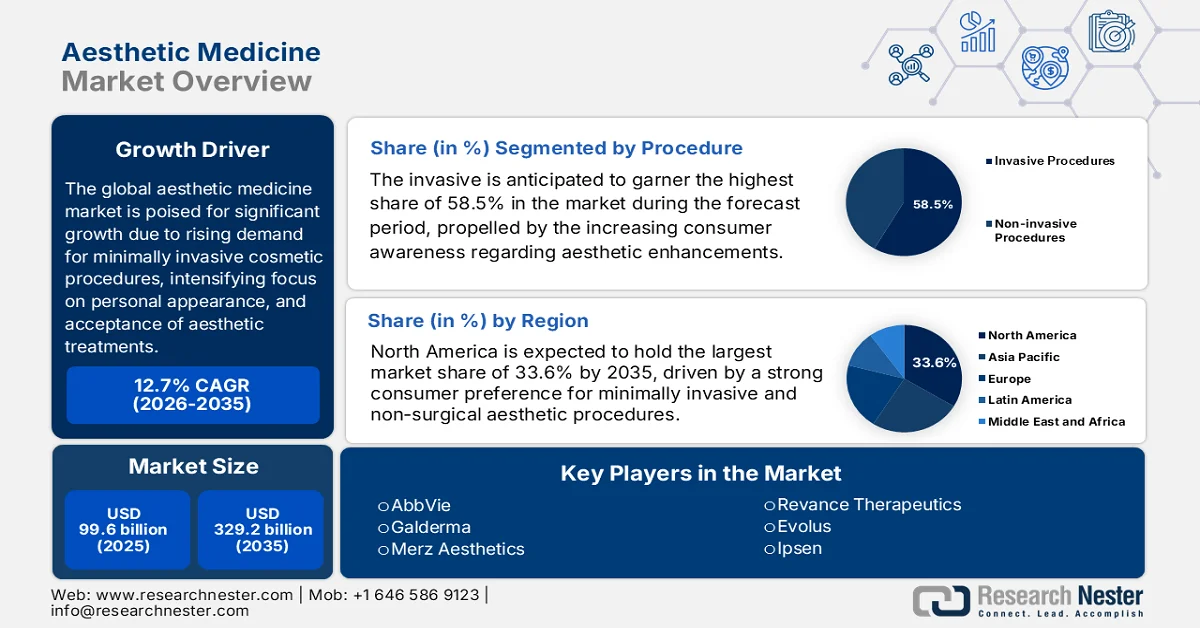
The rising demand for minimally invasive cosmetic procedures, intensifying focus on personal appearance, and acceptance of aesthetic treatments across most age groups and genders are driving extensive growth in the global aesthetic medicine market. In addition, social media influence and the normalization of cosmetic enhancements are also certain factors fueling demand, especially among younger consumers. In June 2024, the International Society of Aesthetic Plastic Surgery (ISAPS) revealed that in 2023, aesthetic procedures surpassed nearly 35 million worldwide, which marks a 3.4% rise from the previous year. Surgical procedures grew by 5.5% to 15.8 million, whereas non-surgical ones totaled 19.1 million. Liposuction led surgical interventions with 2.2 million cases, and botulinum toxin dominated non-surgical treatments with 8.8 million. It also mentioned that the U.S. led with 6.1 million procedures, followed by Brazil with a total of 3.3 million, thus reflecting a global 40% increase in aesthetic procedures in a span of four years.
Furthermore, the expanding medical tourism and the entry of new clinics and medspa chains are increasing service availability across both developed and emerging regions, prompting a profitable business environment for pioneers in the market. According to an article published by the National Institute of Health (NIH) in April 2023, in a span of three years, the cost of aesthetic surgeries showed different trends, wherein rhytidectomy, blepharoplasty, and otoplasty increased by 38.1%, 33.4%, and 30.4% and liposuction decreased by 10%. Procedures such as breast augmentation and abdominoplasty correlated strongly with time, whereas rhinoplasty and breast lift aligned more closely with consumer price indices. Overall, most aesthetic surgery prices were modestly impacted by inflation, suggesting supply and demand play a larger role in shaping costs.
Average Cosmetic Surgery Fees by Procedure (Face) 2023 vs 2022 - Surgeon Pricing Trends & Market Analysis
|
Procedure |
2023 (USD) |
2022 (USD) |
|
Buccal fat pad removal |
3,142 |
2,883 |
|
Cheek implant (malar augmentation) |
3,876 |
3,781 |
|
Chin augmentation (mentoplasty) |
3,641 |
3,379 |
|
Ear surgery (otoplasty) |
4,625 |
3,962 |
|
Eyelid surgery (upper blepharoplasty) |
3,359 |
- |
|
Eyelid surgery (lower blepharoplasty) |
3,876 |
- |
|
Facelift (rhytidectomy) |
11,395 |
9,281 |
|
Facial fat grafting |
3,617 |
3,100 |
|
Forehead lift |
5,460 |
4,282 |
|
Liposuction (submental) |
3,194 |
2,852 |
|
Neck lift |
7,885 |
6,267 |
|
Nose reshaping (rhinoplasty) |
7,637 |
6,324 |
Source: Plastic Surgery Organization
Average Costs of Minimally Invasive Cosmetic Procedures 2023 vs 2022 - Botox, Fillers & Non-Surgical Treatment Pricing Trends
|
Procedure |
2023 (USD) |
2022 (USD) |
|
Neuromodulator injections (Botox®, Dysport®, Xeomin®, Jeuveau®, Daxxify®) |
435 |
528 |
|
Lip augmentation (injectables) |
698 |
743 |
|
Noninvasive fat reduction (CoolSculpting®, Liposonix®, Emsculpt®, Vanquish®, Zerona®, Kybella®) |
1,157 |
1,226 |
|
Noninvasive skin tightening (Pelleve®, Thermage®, Ulthera®) |
2,326 |
1,832 |
|
Platelet-rich plasma (PRP) |
755 |
— |
|
Sclerotherapy |
500 |
428 |
|
Skin resurfacing (dermabrasion, chemical peel, lasers, microdermabrasion) |
1,829 |
1,489 |
|
Skin treatments (laser hair removal, IPL, tattoo removal, leg vein laser) |
697 |
582 |
|
Hyaluronic acid fillers (Juvederm®, Restylane®, Belotero®, etc.) |
715 |
794 |
|
Non-hyaluronic acid fillers (Radiesse®, Sculptra®, Bellafill®, Renuva®) |
901 |
1,039 |
Source: Plastic Surgery Organization
Key Aesthetic Medicine Market Insights Summary:
Regional Highlights:
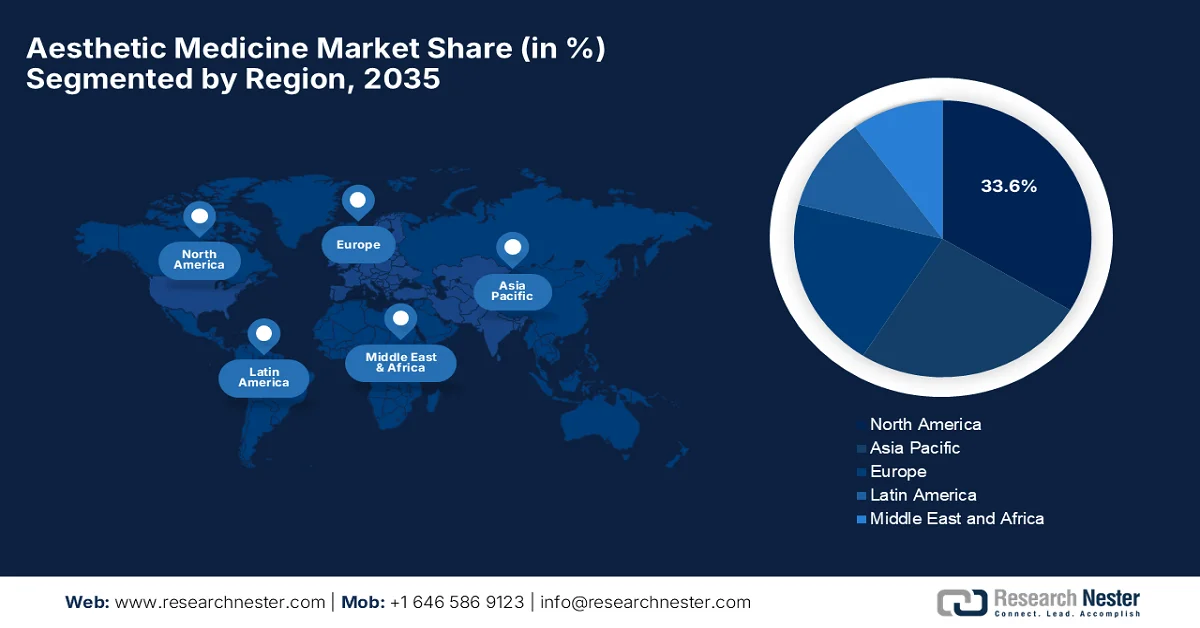
- North America is projected to secure a 33.6% share by 2035 in the aesthetic medicine market, underpinned by accelerating consumer preference for minimally invasive and non-surgical aesthetic procedures
- Asia Pacific is poised to register considerable expansion during 2026-2035, stimulated by rising consumer focus on facial aesthetics, evolving beauty standards, K-beauty influence, and increasing medical tourism
Segment Insights:
- The invasive segment is anticipated to account for a 58.5% share by 2035 in the aesthetic medicine market, reinforced by growing demand for surgical cosmetic procedures, expanding awareness of aesthetic enhancements, and progress in minimally invasive surgical techniques
- By 2035, the clinics & aesthetic centers segment is expected to capture a considerable revenue share, fueled by the increasing transition of aesthetic treatments from hospitals to specialized outpatient facilities
Key Growth Trends:
- Growth of the medical tourism industry
- Surge in minimally invasive and non-invasive procedures
Major Challenges:
- Safety concerns and procedure risks
- Counterfeit products and unregulated market
Key Players: AbbVie (U.S.), Galderma (Switzerland), Merz Aesthetics (Germany), Revance Therapeutics (U.S.), Evolus (U.S.), Ipsen (France), Sinclair Pharma (UK), Alma Lasers (Israel), Lumenis (Israel), Candela Medical (U.S.), Hugel (South Korea), Medytox (South Korea), Bausch Health (Canada).
Global Aesthetic Medicine Market Forecast and Regional Outlook:
Market Size & Growth Projections:
- 2025 Market Size: USD 99.6 billion
- 2026 Market Size: USD 112.2 billion
- Projected Market Size: USD 329.2 billion by 2035
- Growth Forecasts: 12.7% CAGR (2026-2035)
Key Regional Dynamics:
- Largest Region: North America (33.6% Share by 2035)
- Fastest Growing Region: Asia Pacific
- Dominating Countries: United States, South Korea, Japan, Germany, China
- Emerging Countries: China, India, Thailand, Japan, South Korea
Last updated on : 22 June, 2026
Aesthetic Medicine Market - Growth Drivers and Challenges
Growth Drivers
- Growth of the medical tourism industry: This is the primary driver for the aesthetic medicine market globally, wherein the patients are travelling to countries offering high-quality but affordable cosmetic procedures. These nations attract international clients who are looking for procedures by combining cost efficiency with skilled medical expertise. In September 2025, an NIH article reviewed 2324 international patients who underwent 7141 cosmetic procedures in Cartagena, Colombia, in a span of 10 years. Most patients, i.e., 89%, traveled from the U.S. and Canada, with women comprising 83.4% of the cohort and 98% aged between 20 and 69 years. The overall complication rate was 6.2% per patient, which is 2.2% per procedure, and compared favorably with U.S. benchmarks. These findings highlight that plastic surgery medical tourism, when performed in high-volume, well-regulated centers, can achieve safe and high-quality outcomes, thus supporting the market’s expansion.
- Surge in minimally invasive and non-invasive procedures: Consumers' preference is slightly higher towards non-surgical alternatives such as neuromodulators, botox, and dermal fillers. These treatments provide lower upfront costs and minimal downtime, whereas the non-invasive procedures now account for over two-thirds of total treatment demand. According to the article published by the Plastic Surgery Organization in 2024, cosmetic breast procedures showed minimal changes when compared to 2023. Breast augmentation rose slightly by 1% to 306,196 cases, whereas breast implants were 41,271. Both breast lift and breast reduction procedures held steady, and male breast reduction (gynecomastia surgery) saw the highest growth, up 2% to 26,430 procedures, reflecting a gradual rise in demand, hence benefiting the overall market.
Body Cosmetic Surgery Procedures Statistics 2024 vs 2023 Market Trends & Growth Analysis
|
Procedure |
2024 |
2023 |
% Change (2024 vs 2023) |
|
Abdominoplasty (tummy tuck) |
171,064 |
170,110 |
1% |
|
Buttock augmentation with fat grafting |
29,466 |
29,383 |
0% |
|
Buttock implants |
1,245 |
1,234 |
1% |
|
Buttock lift |
7,954 |
7,748 |
3% |
|
Labiaplasty |
10,827 |
10,631 |
2% |
|
Liposuction |
349,728 |
347,782 |
1% |
|
Lower body lift |
10,957 |
10,947 |
0% |
|
Thigh lift |
9,914 |
9,600 |
3% |
|
Upper arm lift (brachioplasty) |
23,527 |
23,058 |
2% |
Source: Plastic Surgery Organization
Facial Cosmetic Surgery Procedures Data 2024 vs 2023: Global Trends & Procedure Growth Insights
|
Procedure |
2024 |
2023 |
% Change (2024 vs 2023) |
|
Buccal fat pad removal |
4,903 |
4,866 |
1% |
|
Cheek implant (malar augmentation) |
9,130 |
8,825 |
3% |
|
Chin augmentation (mentoplasty) |
5,529 |
5,484 |
1% |
|
Ear surgery (otoplasty) |
4,825 |
4,817 |
0% |
|
Eyelid surgery (blepharoplasty) |
120,755 |
120,747 |
0% |
|
Facelift (rhytidectomy) |
79,058 |
78,482 |
1% |
|
Facial fat grafting |
34,260 |
34,216 |
0% |
|
Forehead lift |
13,621 |
13,518 |
1% |
|
Liposuction (submental/chin) |
24,000 |
23,667 |
1% |
|
Neck lift |
22,445 |
22,007 |
2% |
|
Nose reshaping (rhinoplasty) |
48,423 |
47,307 |
2% |
Source: Plastic Surgery Organization
Challenges
- Safety concerns and procedure risks: The aesthetic procedures are minimally invasive, but they still carry inherent safety risks that challenge aesthetic medicine market growth. Injectable treatments such as botulinum toxin and dermal fillers can lead to complications such as bruising, infection, asymmetry, vascular occlusion, or any type of allergic reaction. Apart from this, improper intake by unqualified practitioners increases the chance of adverse outcomes, negatively impacting patient trust. Energy-based devices also carry risks such as burns or pigmentation changes if misused. Meanwhile, the rapid expansion of aesthetic clinics globally has led to inconsistent practitioner expertise. Furthermore, misinformation on social media can encourage unsafe self-treatment trends or unrealistic expectations, causing a hindrance to the market’s expansion.
- Counterfeit products and unregulated market: The emergence of counterfeit and unregulated products also presents a serious challenge to the market’s growth and safety standards. Illegally manufactured injectables and devices often enter grey markets, particularly in regions that have weaker enforcement mechanisms. Also, the products might not have proper quality control, which leads to severe health risks. Counterfeits also damage the reputation of legitimate brands and reduce patient confidence in aesthetic treatments overall. The rise of online marketplaces and unauthorized distributors has increased accessibility to these unsafe products. Furthermore, companies and regulators are making investments in terms of authentication technologies, serialization, and track-and-trace systems to combat this issue.
Aesthetic Medicine Market Size and Forecast:
| Report Attribute | Details |
|---|---|
|
Base Year |
2025 |
|
Forecast Year |
2026-2035 |
|
CAGR |
12.7% |
|
Base Year Market Size (2025) |
USD 99.6 billion |
|
Forecast Year Market Size (2035) |
USD 329.2 billion |
|
Regional Scope |
|
Aesthetic Medicine Market Segmentation:
Procedure Segment Analysis
On the basis of procedure, the invasive is anticipated to garner the highest share of 58.5% in the aesthetic medicine market during the forecast period. The segment’s dominance is effectively propelled by the heightening demand for surgical cosmetic procedures, increasing consumer awareness regarding aesthetic enhancements, and advancements in minimally invasive surgical techniques. For instance, in October 2024, Establishment Labs announced that the first U.S. patients had received breast augmentation using newly Food & Drug Administration (FDA)-approved Motiva Implants. It also mentioned that these 6th-generation devices, which consist of the SmoothSilk® surface, are designed for enhanced biocompatibility and lower complication rates, thus positively benefiting the segment’s dominance.
End use Segment Analysis
By the end of 2035, the clinics & aesthetic centers segment is expected to grow with a considerable revenue share in the market. The increasing shift of aesthetic procedures from hospital settings to specialized outpatient facilities is the main factor behind this leadership. These centers offer well- established aesthetic infrastructure, flexible appointment scheduling, shorter patient wait times, and a portfolio of cosmetic treatments at a single place. In November 2024, Allergan Aesthetics announced the launch of AMI business education, which is a free online program through AMI Online to support healthcare providers in growing their practices. The curriculum includes seven short e-training sessions that cover topics such as goal setting, patient retention, and telephone conversion.
Product Segment Analysis
Based on the product segment, injectables are forecasted to attain a noteworthy share in the aesthetic medicine market during the discussed timeframe. The segment’s growth is largely attributable to rising demand for facial rejuvenation and anti-aging treatments, and the ability of injectable products to deliver visible results with a very minimal downtime. The growing availability of advanced botulinum toxin and dermal filler formulations, expanding treatment indications, is also contributing to segment growth. In September 2025, Revance reported that it reached a major milestone with the distribution of one million vials of DAXXIFY® in the U.S., just in a span of three years after its FDA approval. It is known as the fastest-growing neurotoxin in the country, and the DAXXIFY® possesses a proprietary peptide formulation that delivers long-lasting results without human or animal-based components.
Our in-depth analysis of the aesthetic medicine includes the following segments:
|
Segment |
Subsegments |
|
Procedure |
|
|
End use |
|
|
Product |
|
|
Gender |
|

Vishnu Nair
Head - Global Business DevelopmentCustomize this report to your requirements — connect with our consultant for personalized insights and options.
Aesthetic Medicine Market - Regional Analysis
North America Market Insights
The North America aesthetic medicine market is anticipated to dominate with a total share of 33.6% over the forecasted years. The region’s leadership is mainly driven by a massive consumer shift toward minimally invasive and non-surgical procedures such as botox, dermal fillers, and laser-based skin rejuvenation. This dominant regional market benefits from a highly advanced clinical infrastructure and strong R&D investments from key industry leaders. As per an article published by NIH in March 2026, data for 2024 show a strong dominance of minimally invasive procedures within aesthetic practice. The study reports a total procedural volume of 30,877,819, of which 28,243,407 procedures which is 91.5% were minimally invasive. This category far exceeded cosmetic surgery, which was 5.1%, and reconstructive procedures, 3.4%. Overall, the findings indicate that minimally invasive procedures comprise the majority of aesthetic and plastic surgery activity in the U.S., thus elevating the growth potential of the market.
A profound cultural shift toward early intervention and preventative anti-aging treatments, such as baby botox and dermal fillers, is a certain trend visibly reshaping the growth dynamics of the overall U.S. aesthetic medicine market. The country’s market growth is also propelled by an advanced network of specialized medical spas and clinics, along with rapid technological innovations in non-invasive body contouring and laser skin resurfacing. In this context, Revance in February 2026 introduced the new StriVectin barrier restore+ collection, which is a fragrance-free skincare line for sensitive skin and barrier health. This launch includes two products, i.e., the soothing ceramide cream, which is clinically proven to strengthen the skin barrier and reduce visible signs of aging, and the soothing milky mist, which provides instant hydration and calming effects.
An escalating consumer preference for subtle enhancements achieved through non-surgical interventions is responsibly driving the market in Canada. The market relies on a regulated infrastructure, which is being overseen by strict provincial medical authorities that possess high standards of patient safety. For instance, in February 2026, Bausch Health’s aesthetics division, Solta Medical, announced the launch of the Clear + Brilliant® Touch laser in Canada, followed by Health Canada’s approval in May 2025. This advanced dual‑wavelength system offers customizable, non‑invasive skin rejuvenation treatments with minimal downtime, suitable for all skin types and ages. Hence, with continued innovations, the Canada market will witness unprecedented growth in the next decade.
APAC Market Insights
The Asia Pacific market is expected to witness considerable growth from 2026 to 2035. The region’s growth in this field is driven by a massive consumer emphasis on facial aesthetics and flawless skin health. The market is also being propelled by the immense cultural phenomenon of K-beauty trends, continuously changing beauty standards, and high medical tourism across hubs such as South Korea, Thailand, and Japan. Rising disposable incomes and expanding urban populations also fuel the demand for both surgical modifications. In March 2025, Shonan Beauty Clinic, which is a part of SBC Medical Group, is expanding its multi‑brand strategy with the launch of SBC NEO Skin Clinic Ebisu in Tokyo. Besides, the clinic introduces a new brand which focused on non‑invasive dermatology, leveraging advanced laser and skincare treatments inspired by South Korea and Western markets.
The young, digitally native consumer base whose purchasing decisions are heavily influenced by domestic social commerce platforms and specialized aesthetic apps is responsibly uplifting the aesthetic medicine market in China. This massive demand is also being fueled by expanding middle-class disposable income, a growing acceptance among male consumers, and the rapid modernization of domestic clinic chains. In April 2025, Galderma announced the launch of Sculptra® in China, which was followed by approval by the country’s National Medical Products Administration to treat mid‑facial volume loss and contour deficiencies. It is the first proven regenerative biostimulator with more than 25 years of clinical evidence, and Sculptra offers natural‑looking results lasting up to two years.
In India, the market is poised for explosive growth driven by the expansion of dermatology and aesthetic clinic networks, along with the regulatory formalization of injectable treatments. In addition, the rising influence of social media, accessibility to advanced technologies, and increasing participation of younger demographics in preventive aesthetic treatments are collectively shaping market development. As per an article published by NIH in December 2024, the country’s aesthetic plastic surgery sector is experiencing exponential growth and is ranking second globally in rhinoplasty and liposuction, and seventh overall in surgical and nonsurgical procedures. The country witnesses one million procedures yearly, and increased awareness is fueling this surge. The market was calculated at USD 4.2 billion in 2023, and is projected to reach a substantial USD 11.5 billion by 2030, thus denoting a positive market outlook.
Europe Market Insights
The Europe aesthetic medicine market has acquired a prominent position in the global landscape, supported by an exceptionally rigid regulatory environment, including strict CE marking standards. The region benefits from a highly developed clinical infrastructure and a strong presence of pioneering medical device manufacturers. For instance, in October 2024, Evolus received EU MDR certification for Estyme® injectable hyaluronic acid gels, which marks a major regulatory milestone that allows entry into Europe’s dermal filler market. The CE Mark under the new MDR standards ensures the highest levels of safety, efficacy, and quality. Hence, such developments solidify Europe’s position as a highly regulated, innovation-driven industry.
A mature demographic seeking healthy aging solutions, a rising interest in preventative pre-juvenation among younger adults, are driving Germany aesthetic medicine market. This growth is also accelerated by widespread access to advanced medical technology, a network of specialized dermatology clinics, and an increasing preference for combination treatments that utilize laser therapies, body contouring systems, and premium injectable neuromodulators. In clinical practice, this is reflected in the routine pairing of energy-based devices with injectables to enhance overall skin quality and treatment longevity. Preventive aesthetic procedures are being adopted in younger patients, especially for early wrinkle management and skin maintenance, thus contributing to the market’s expansion.
The UK aesthetic medicine market is growing at a rapid pace of progress owing to high social media penetration, the influence of celebrity culture, and the widespread popularity of high-street medical spas. The market is undergoing a major evolution propelled by increasing consumer preference for treatments administered by medically qualified practitioners, along with a rising demand for advanced laser skin resurfacing, body contouring, and combination therapies. As per an article published by NIH in February 2026 the UK aesthetic botulinum toxin industry shows a rapidly expanding sector by identifying 19,701 practitioners across 5,589 clinics which is a 437% increase over two years. The report found that botulinum toxin services are delivered by a mixed workforce, wherein doctors being 28.4% nonmedical aestheticians 24.8% dentists, and nurses, reflecting broad accessibility.
Key Aesthetic Medicine Market Players:
- AbbVie (U.S.)
- Galderma (Switzerland)
- Merz Aesthetics (Germany)
- Revance Therapeutics (U.S.)
- Evolus (U.S.)
- Ipsen (France)
- Sinclair Pharma (UK)
- Alma Lasers (Israel)
- Lumenis (Israel)
- Candela Medical (U.S.)
- Hugel (South Korea)
- Medytox (South Korea)
- Bausch Health (Canada)
- Company Overview
- Business Strategy
- Key Product Offerings
- Financial Performance
- Key Performance Indicators
- Risk Analysis
- Recent Development
- Regional Presence
- SWOT Analysis
- AbbVie, through its Allergan Aesthetics division, has registered itself as a predominant leader in this sector with the most diversified product portfolio, including neurotoxins and regenerative aesthetics. The company emphasizes continuous innovation with its R&D pipeline focused on neurotoxins, soft-tissue fillers, and minimally invasive procedures.
- Galderma is a pure-play dermatology and aesthetics company that is focused on injectables, dermatological skincare, and therapeutic dermatology. The firm’s prominence is supported by a strong clinical research foundation in skin biology as well as aging science.
- Merz Aesthetics is a foundational player in this sector, which specializes in regenerative aesthetics and minimally invasive treatments. The company positions itself around biostimulation and skin quality improvement, with a strong focus on collagen and elastin regeneration.
- Revance Therapeutics is focused on next-generation neuromodulators and aesthetic therapeutics, and the firm is best known for Daxxify®, which is a peptide-formulated botulinum toxin product. The company’s strategy is structured around innovation in peptide technology, expanding neuromodulator indications, and building competitive differentiation.
- Evolus is a U.S.-based performance beauty company focused primarily on the aesthetic neuromodulator industry. The company’s strategy centers on targeted commercialization in aesthetic clinics, strong consumer-facing branding, and expansion in the injectable market share.
Here is a list of key players operating in the global market:
The aesthetic medicine market is hosting well-established pharmaceutical pioneers along with specialized med-tech innovators. Leaders such as AbbVie, Galderma, and Merz Aesthetics dominate the injectables category through strong global brands and continuous product innovation. Device manufacturers, i.e., Cynosure, Candela Medical, and Lumenis, are focused on energy-based technologies, expanding treatment versatility. Strategic initiatives opted by the industry players are portfolio expansion, regulatory approvals for new indications, mergers and acquisitions, and investment in regenerative aesthetics. Partnerships with clinics and physician training programs also strengthen market penetration. In December 2025, Bausch Health’s aesthetics division, which is Solta Medical, announced the acquisition of its China distribution partner, Shibo Group, to strengthen its direct presence in China aesthetics industry with total control over the distribution of key devices such as Thermage® FLX.
Corporate Landscape of the Market:
Recent Developments
- In June 2026, AbbVie’s Allergan Aesthetics received the U.S. FDA approval for SKINVIVE by JUVÉDERM® to improve the appearance of neck lines, including horizontal wrinkles associated with tech-neck. This expands SKINVIVE’s existing approval beyond cheek skin smoothness, and it is the first hyaluronic acid injectable indicated for neck line reduction in adults over 21.
- In April 2026, Merz Aesthetics announced the U.S. FDA approval of RADIESSE for treating wrinkles in the décolleté (chest) area in adults aged who are 22 and older, expanding its use as a regenerative biostimulator for both face and body. This marks its fourth indication in the U.S., positioning it as a collagen-stimulating injectable that is designed to improve skin firmness and reduce visible signs of aging.
- Report ID: 8618
- Published Date: Jun 22, 2026
- Report Format: PDF, PPT
- Explore a preview of key market trends and insights
- Review sample data tables and segment breakdowns
- Experience the quality of our visual data representations
- Evaluate our report structure and research methodology
- Get a glimpse of competitive landscape analysis
- Understand how regional forecasts are presented
- Assess the depth of company profiling and benchmarking
- Preview how actionable insights can support your strategy
Explore real data and analysis
Frequently Asked Questions (FAQ)
About this Report
Connect with our Expert


Report, 2026-2035



Copyright @ 2026 Research Nester. All Rights Reserved.
